Periodic Monitoring Cannot Capture Risks in Real-Time
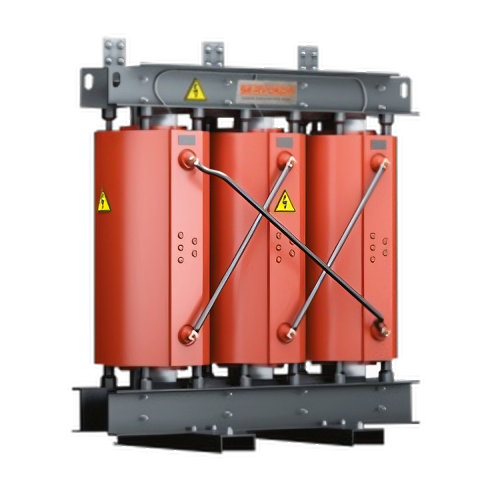
Dry-type transformers are designed for reliability and low internal losses. Hence, their performance is highly dependent on effective maintenance. One of the most critical factors that continuously affects the performance of dry-type transformers is thermal hotspots. Real-world operating conditions, such as load variations, insulation degradation, airflow constraints, and other environmental factors, exacerbate thermal stress, leading to uneven, progressive degradation.
Traditional monitoring approaches, such as periodic inspections, indirect estimates, or handheld measurements, fail to provide continuous visibility into these critical faults. Additionally, they only initiate action after a failure has occurred.
Thus, accelerating asset aging, increasing unplanned downtime, and maximizing maintenance costs.
Traditional hotspot monitoring techniques rely on predefined intervals or threshold-based alarms, which do not account for how hotspots evolve over time. Predictive maintenance addressed this gap by providing continuous, real-time visibility and analysis of hotspot behavior across dry-type transformers. Instead of reacting to threshold breaches, it evaluates thermal trends, deviations from normal operating profiles, and the accumulation of stress over time.
This enables operators to identify when a hotspot is not just present but actively contributing to insulation aging and increased failure probability. By understanding both the severity and trajectory of these thermal conditions, maintenance actions can be planned based on actual asset condition rather than assumptions. Thus, reducing unnecessary interventions while preventing in-service failures.
With Rugged Monitoring’s Dry-Type Transformer Monitoring
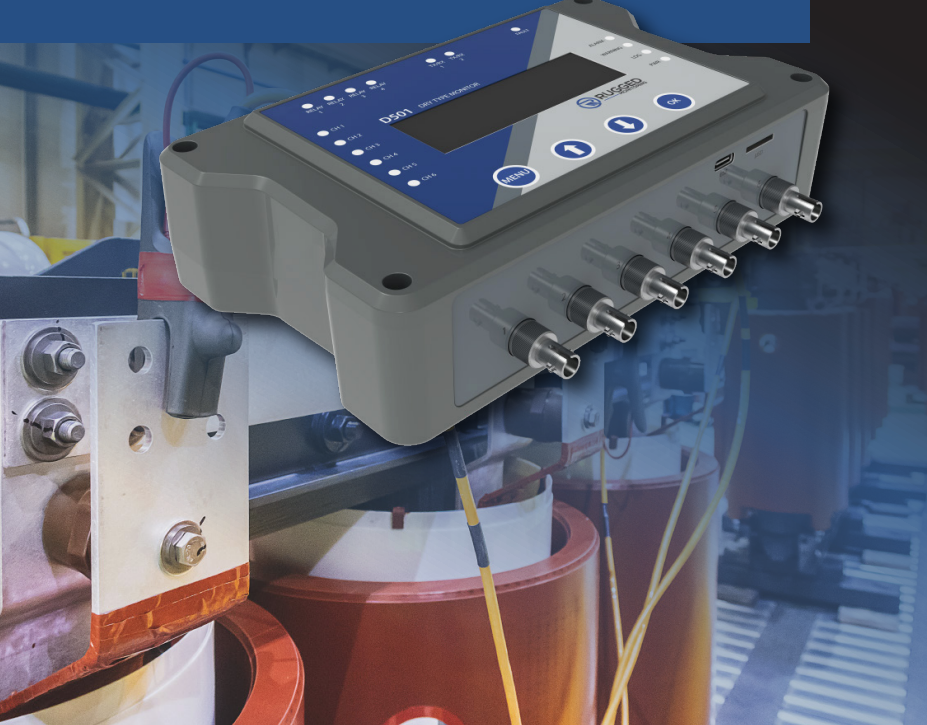
Rugged Monitoring’s approach to dry-type transformer monitoring is based on a fundamental principle that accurate prediction requires accurate measurement at the point of risk. Our fluorescence-based fiber-optic temperature sensors are embedded in the transformer windings to capture real-time temperature data at critical hotspot locations. They ensure that the data reflect the asset’s actual thermal state rather than inferred or surface-level approximations.
This high-fidelity data is then acquired and processed by our Fl-based edge device, which ensures continuous data availability and local reliability. The edge layer acts as the first level of validation and aggregation, maintaining data integrity before transmission.
The value of this data is realized when it is contextualized within the RM EYE platform. Here, temperature data is not treated in isolation but is analyzed alongside operating conditions and historical trends to yield meaningful insights. RM EYE translates raw measurements into asset health indicators, thermal behavior trends, and risk insights, enabling a deeper understanding of how hotspots evolve and impact transformer performance over time.
This integrated architecture moves beyond condition monitoring to establish a predictive, scalable asset intelligence framework, where each transformer is continuously evaluated and decisions are supported by real, contextual data. It also provides a foundation for broader digitalization, enabling centralized visibility, fleet-level analysis, and long-term performance optimization across assets.
Real-Time Dry-Type Transformer Monitoring Intelligence
Advantages of RM’s comprehensive monitoring system ecosystem
GaAs and fluorescence-based fiber-optic sensors directly measure true winding-hotspot temperatures with high accuracy.
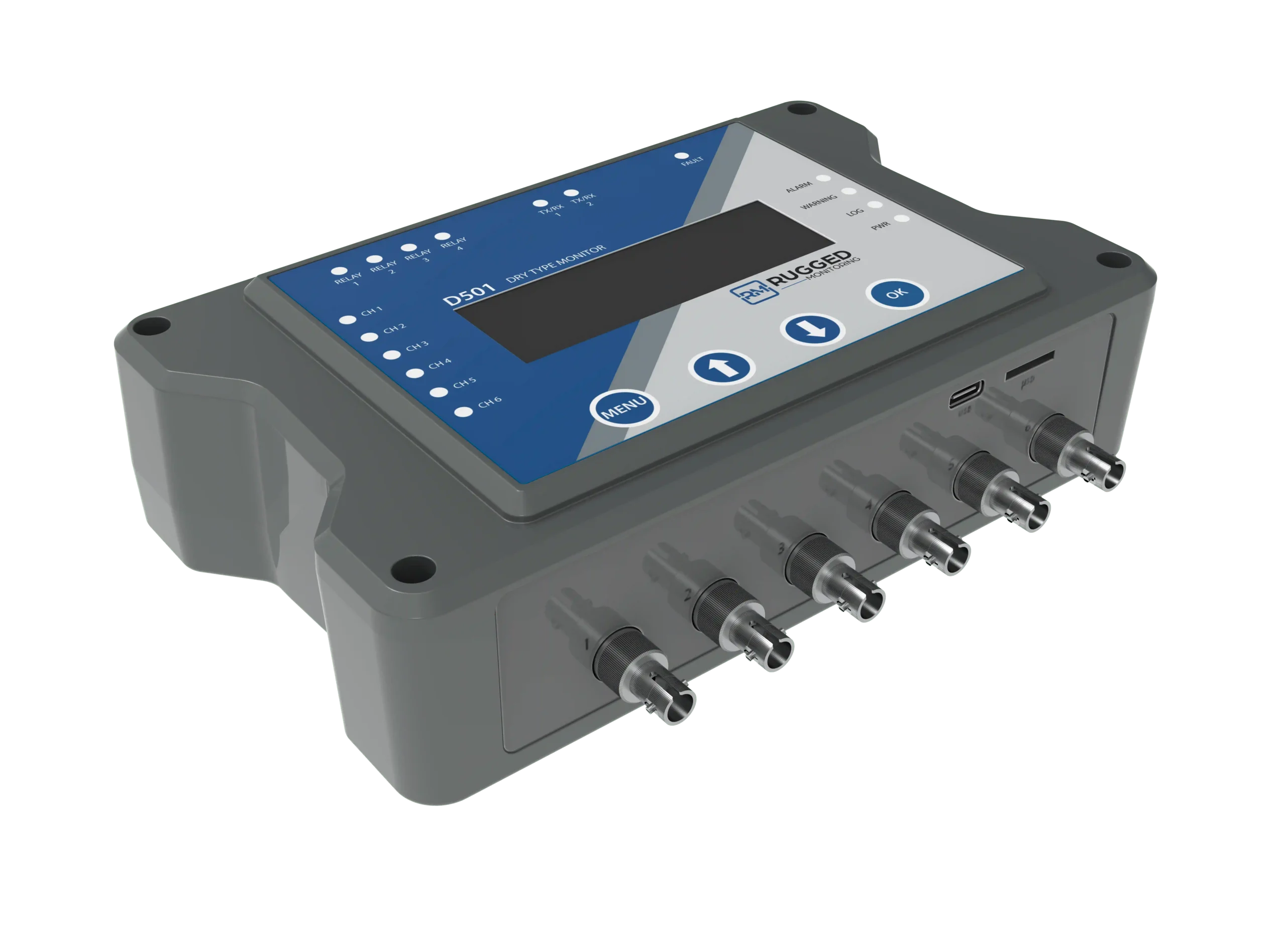
High-precision monitoring units acquire, process, and transmit hotspot temperature data reliably from live transformers.
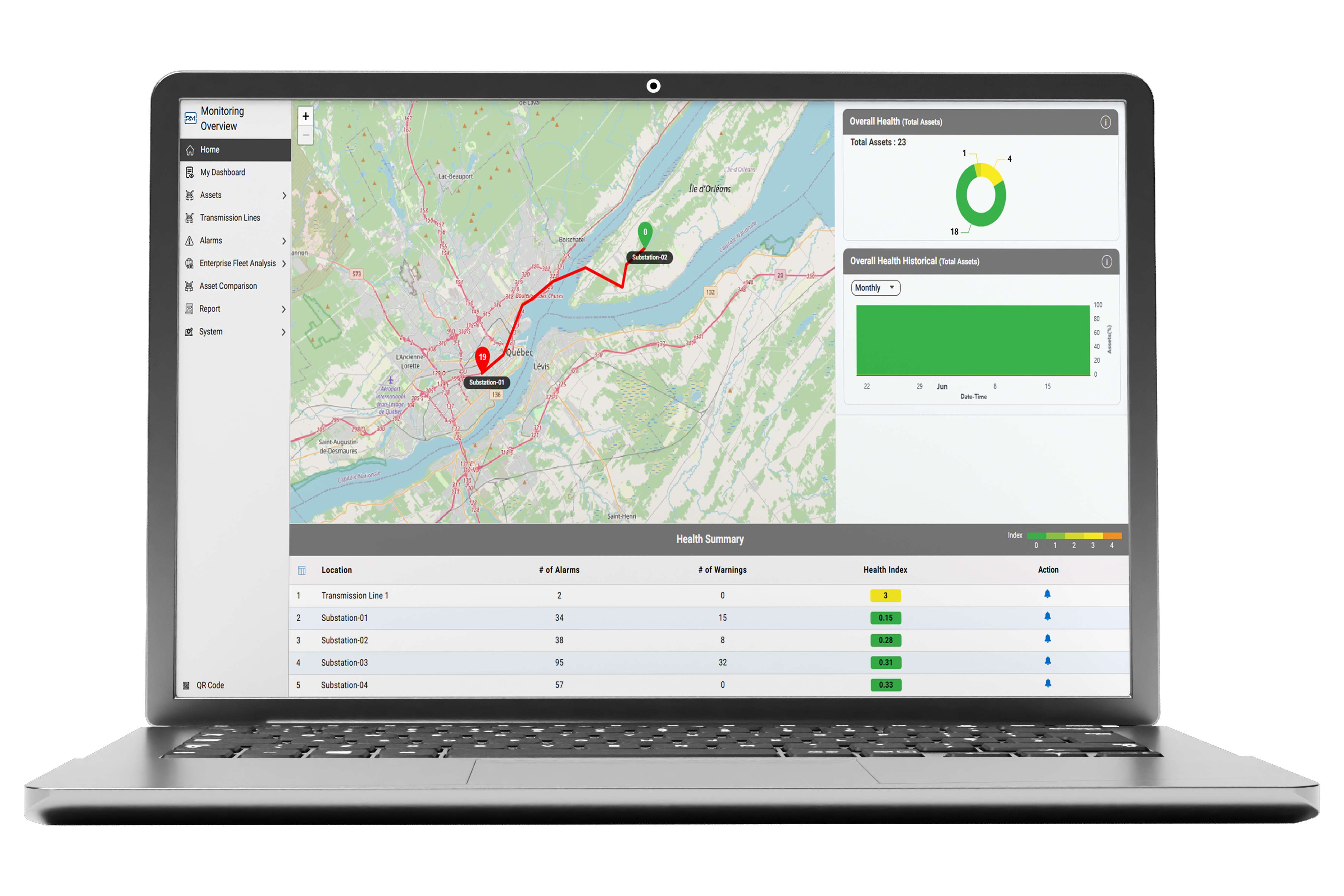
RM EYE analyzes hotspot trends, correlates load behavior, and delivers predictive thermal insights across transformer fleets.

Why is hotspot monitoring critical in dry-type transformers?
Hotspots indicate localized thermal stress within windings, which directly impacts insulation life and failure probability. Without direct measurement, these risks remain undetected until failure.
How is fiber optic sensing different from conventional temperature monitoring?
Fiber-optic sensors measure temperature directly at the hotspot inside the transformer, unlike conventional methods that rely on indirect or surface measurements.
Can this solution be integrated with existing monitoring systems?
Yes. Our edge-device can integrate with existing infrastructure, while RM EYE provides an additional APM layer for advanced analytics and centralized visibility.
Have questions or need more information? Reach out to us for reliable Rugged Monitoring solutions.