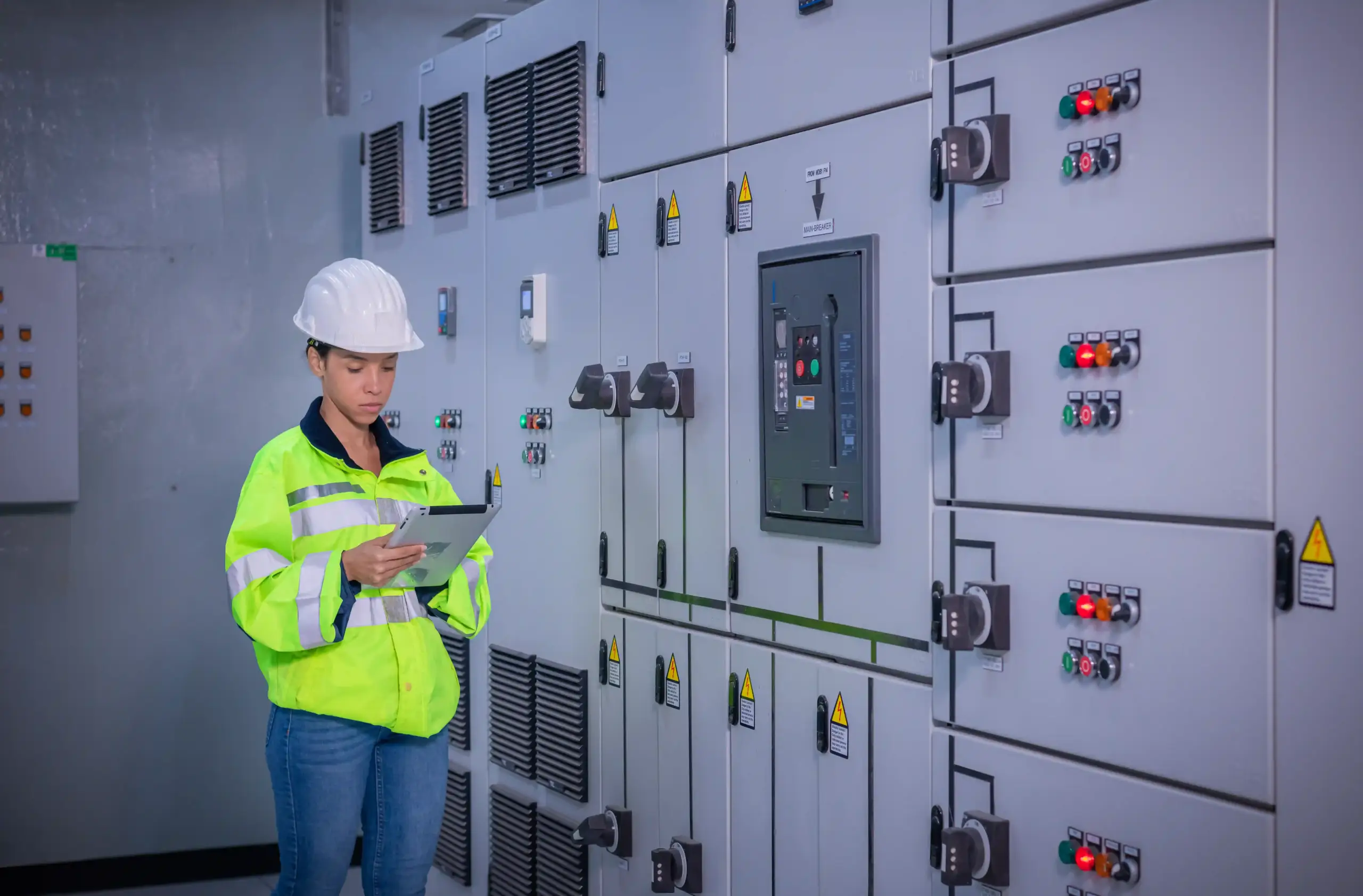
APM in switchgear monitoring plays a critical role in improving the reliability and performance of electrical networks, especially as systems operate under increasingly dynamic load and environmental conditions. Switchgears control, protect, and isolate electrical equipment under both normal and fault conditions, making their performance essential to grid stability.
Industry studies indicate that early fault detection in switchgear can significantly reduce the risk of major failures and unplanned outages. Despite this, many systems still rely on fragmented monitoring approaches that limit visibility and delay decision-making.
What is APM in Switchgear Monitoring?
Traditional monitoring systems track parameters such as partial discharge, temperature, and gas conditions, but they often present this data in isolation.
APM brings multiple assets and their parameters together on a centralized platform and transforms them into structured insights. It enables operators to understand asset behavior, detect patterns, and prioritize actions based on actual conditions rather than assumptions.
From Monitoring Data to Predictive Insights in Switchgear
A switchgear monitoring system generates large volumes of data, but operators derive value from how they analyze that data. In many cases, organizations use only a fraction of the available operational data, limiting the effectiveness of their monitoring systems.
APM in switchgear monitoring addresses this challenge by connecting data across parameters and converting it into actionable insights. Instead of reacting to isolated alarms, operators gain a clearer understanding of system performance and emerging risks.
The Gap Between Data Collection and Actionable Insights
Monitoring systems provide valuable inputs such as:
- Partial discharge activity
- Thermal conditions
- SF6 gas parameters
- Load behavior
However, without proper correlation, these values remain disconnected. Even critical indicators can be overlooked, which contributes to avoidable failures.
For example, partial discharge may indicate insulation degradation, but without linking it to load or environmental conditions, it is difficult to assess severity. APM in switchgear monitoring closes this gap by enabling:
- multi-parameter correlation
- anomaly detection
- condition-based insights
This approach ultimately leads to clearer risk prioritization and more informed maintenance actions, helping operators make decisions based on real asset conditions instead of assumptions.
Key Data Points That Drive APM Decisions
Effective APM depends on how well operators connect and interpret multiple data points.
-
- Partial Discharge Activity
Partial discharge indicates early-stage insulation defects. Continuous monitoring supports switchgear failure prediction and enables operators to identify risks before they escalate. - Thermal Conditions
Temperature variations highlight abnormal stress within the components. Overheating often signals loose connections or load-related issues. - SF₆ Gas Condition (for GIS)
Gas-insulated switchgear relies on stable gas conditions. Changes in pressure or moisture levels indicate potential insulation problems. - Load and Operating Conditions
Load cycles and environmental factors influence equipment behavior. Without this context, readings can appear misleading.
- Partial Discharge Activity
When operators analyze these parameters together, they gain a more accurate view of overall asset health. Rugged Monitoring’s Switchgear Monitoring System supports this through an end-to-end monitoring ecosystem, including the RM EYE platform, which brings data from multiple parameters into a single environment for analysis.
How APM in Switchgear Monitoring Enables Predictive Maintenance?
The real value of APM lies in its ability to convert monitoring data into predictive insights. It provides context, allowing operators to interpret system behavior across multiple parameters.
APM platforms:
- analyze trends over time
- detect deviations from normal behavior
- generate alerts based on combined conditions
For example:
- Increasing partial discharge combined with rising temperature may indicate insulation stress
- Changes in gas conditions alongside load variations may signal developing faults
This enables predictive maintenance in switchgear, where decisions are based on actual asset condition rather than predefined schedules.
As a result:
- maintenance becomes more targeted
- unplanned outages are reduced
- asset life can be extended
How Does APM Improve Switchgear Reliability?
APM in switchgear monitoring improves reliability by enabling early detection and informed decision-making.
Key benefits include:
- continuous visibility into electrical asset health
- reduced dependence on periodic inspections
- early identification of abnormal behavior
- improved prioritization of maintenance activities
Studies show that predictive maintenance strategies can reduce downtime and improve operational efficiency when applied effectively.
A Connected Approach to Switchgear Monitoring
Switchgear monitoring is increasingly becoming part of a connected ecosystem that includes:
- Transformers
- Switchgears
- Circuit breakers
- Rotating machines
- Power cables
- Batteries
This monitoring system is supported by:
- sensors
- edge monitoring devices
- APM
Within this ecosystem, APM acts as the intelligence layer. It integrates data from multiple sources and provides a unified view of asset health and performance. This connected approach ensures that monitoring data does not remain isolated at the device level but contributes to a broader understanding of system behavior across assets and sites.
RM EYE Enterprise Asset Performance Management for Switchgears
Rugged Monitoring extends this connected approach through RM EYE, its enterprise asset performance management platform. It brings together data from multiple monitoring devices and parameters into a single environment, enabling structured analysis and consistent interpretation across switchgear assets.
Instead of presenting individual readings, RM EYE organizes incoming data into a format that allows operators to understand how different parameters interact under actual operating conditions. This helps shift the focus from observing values to understanding asset behavior.
Through RM EYE, operators can:
-
View Data in Context
RM EYE presents switchgear data alongside related parameters, allowing users to interpret readings in relation to load conditions, environmental factors, and system performance rather than isolated values.
-
Correlate Parameters across Systems
The platform enables correlation between partial discharge activity, thermal conditions, gas parameters, and operating behavior. This helps identify whether observed changes are independent events or part of a developing issue.
-
Support Condition-based Decision-making
By organizing data into trends and patterns, RM EYE allows operators to prioritize actions based on asset condition rather than predefined schedules. This reduces uncertainty and improves maintenance planning.
-
Maintain Consistency across Multiple Assets and Sites
RM EYE provides a structured framework for analyzing data across different switchgear installations. This is particularly valuable for organizations managing distributed assets, where consistent evaluation methods are required.
In this way, RM EYE does not replace monitoring systems but builds on them. It connects field-level data with analytical interpretation, allowing operators to move from measurement to understanding and from understanding to action.
Driving Reliable Switchgear Performance with APM
Switchgear monitoring has improved visibility into asset condition, but visibility alone is not sufficient. The ability to interpret data and act on it determines how effectively assets are managed.
APM in switchgear monitoring bridges this gap by transforming data into actionable insights. It supports predictive maintenance, improves reliability, and enhances operational efficiency.
To meet the needs of evolving power systems, operators should focus on turning switchgear data into actionable insights. APM enables this transition, ensuring that switchgear assets operate safely, efficiently, and reliably.
Looking to move from switchgear monitoring to data-driven decision-making? Learn how Rugged Monitoring’s integrated monitoring systems and RM EYE platform support APM in switchgear monitoring by converting data into actionable insights for improved reliability and maintenance planning.