Industry Insights

Top Electrical Asset Monitoring Trends to look for in 2026

The shift from digital adoption to digital maturity

Share

Why 2026 is a critical year for adopting grid modernization trends?

2025 marked a decisive shift toward adopting the ever-evolving grid modernization trends. With the transition from reactive maintenance to proactive and even predictive strategies, utilities understand that digital transformation is happening now more than ever.
While most grids have made minor progress, such as deploying IIoT technology, implementing pilot-level APMs, and rolling out digital substations, systemic reliability challenges remain unaddressed.
With accelerating grid complexity and growing demands for reliable, efficient energy, 2026 will see the adoption of scalable, integrated, and intelligence-driven ecosystems.
From digital substation adoption and AI-driven asset performance management to digital twins capable of emulating real-time fiber-optic sensing trends, the grid modernization trends in the coming years will shift from digital adoption to digital maturity.

What are the top trends in electrical asset monitoring for 2026?

2026 will no longer reward repeating the incremental approaches of 2025. Only utilities that embrace system-level intelligence, full-cycle digitalization, and reliability-driven maintenance will define the next decade of grid resilience and operational excellence.
Substation Digitalization

Substation digitalization can be one of the biggest grid modernization trends in 2026. Utilities have been rapidly replacing their traditional analog systems with IIoT-based fiber-optic sensors, data-driven scalable architectures, and cybersecure communications.

In 2026, this adoption will enter a scale-out phase, prioritizing the end-to-end digitalization of electrical assets.

What does this mean for utilities?

Grid digitalization will progress from addressing data availability issues to improving data usefulness. This new default model will enable automated monitoring, simplified upgrades, and reduced burden on long-term O&M cycles.

AI-Driven Asset Reliability

Artificial Intelligence (AI) will no longer be viewed as just an enhancement layer in 2026. Utilities are increasingly embracing AI-driven predictive analytics and digital twin frameworks in their control rooms. The next decade will see a spike in utilities deploying AI “co-pilots” as part of their digitalization initiatives. As the value of AI matures, it will automatically analyze incident logs, failure models, equipment health trends, and maintenance histories.

This grid modernization trend is backed by the growing investments in AI/ML for grid reliability. Thus, addressing the needs of grid complexity and scalability while shifting the perspective on AI as just a tool.
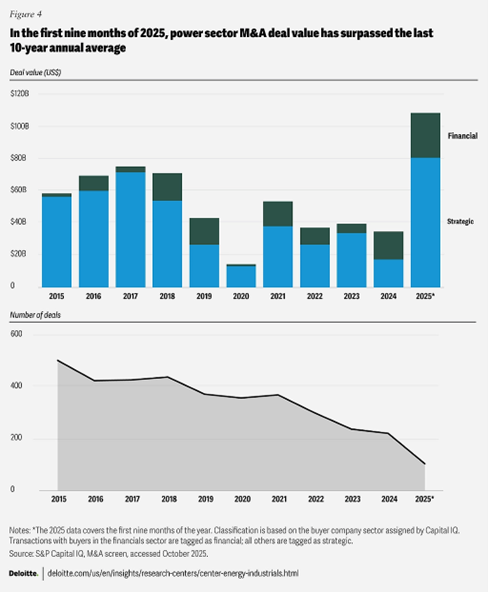
Reference: S&P Capital IQ Pro data, accessed Oct. 8, 2025 (includes deals in the transaction industries of electric utilities, multi-utilities, renewable energy, and independent power producers and energy traders).

Rise of APM Platforms

Utilities struggled with fragmented monitoring ecosystems for years. But in 2025, a shift towards Asset Performance Management (APM) architectures emerged, integrating monitoring, diagnostics, trends, and analytics into a centralized operating system. Operators and asset experts who were struggling to manage multiple dashboards for a single substation can now view electrical assets at an enterprise level.

This eliminated silos even within digital environments, ensuring predictive intelligence as one decision layer. In 2026, this grid modernization trend will continue to rise, marking the transformation towards coordinated, data-driven fleet maintenance.

Explore Rugged Monitoring’s Enterprise-APM Suite RM EYE

Zero-Downtime Mindset

The tolerance for downtime is slowly disappearing across every layer of utility operations as grid modernization trends are adopted. In 2026, this zero-downtime planning will become a strategic expectation rather than an aspirational goal.

In a 2025 installation for complete PD monitoring, RM implemented this mindset for a leading Asian utility monitoring a 90km sub-sea and underground monitoring corridor.

As the utility adopted our end-to-end digitalization ecosystem, its O&M culture changed from reliability just being measured to actively being preserved.
Regulatory & Compliance Pressure

Among the 2026 grid modernization trends, regulatory & compliance pressure will become the strongest drivers for mass digital adoption. Both global and regional policymakers are accelerating requirements around grid resilience, renewable integration, cybersecurity, and digital record traceability. Thus, mandating utilities to adopt digitalization as an accountability factor.

Many regions are already seeing this shift with compliance frameworks rewarding utilities that invest in predictive intelligence and penalizing those who don’t.

List of regions already adopting or implementing smart-grid compliance frameworks:

Country / Region

What They’ve Adopted / What’s in Motion / Relevant Frameworks

European Union (EU member states)

The EU implements binding “network codes” and regulatory frameworks that guide grid operation, interoperability, renewable integration, and smart-grid transitions.

United States (USA)

Through a long history of smart-grid investments, the US grid has extensive regulatory and technical frameworks for digital substations, advanced metering, distribution automation, and grid modernization.

Japan

Among the group of major economies investing in smart-grid infrastructures under international coordination efforts. (NIST)

Canada

Similar to the US and other developed economies, Canada is often named among countries implementing or planning grid modernization and smart-grid frameworks. (NIST)

South Africa

As part of smart-grid and renewable integration efforts, the country has initiated grid modernization and smart-grid policy frameworks, particularly for renewable generation, reliability, and decarbonization.

India

Through national-level programs and smart-grid policies, India is actively working to modernize its grids, promote digital substations, and renewables integration — laying the foundation for compliance and modernization frameworks. (Department of Science & Technology)

Integration of Renewables & Microgrids

As renewable energy adoption surpasses 2025 forecasts, 2026 will introduce the challenge of variability. High-frequency load cycles, bidirectional power flows, and distributed generation will fundamentally change how assets fail and age. Traditional switchgear and other high-voltage equipment designed for one-directional flow should not operate under these dynamic conditions.

Thus, utilities are implementing grid modernization trends to help them balance supply, demand, and asset stress in real time. This shift in monitoring streamlines the integration of renewables & microgrids without compromising asset health or reliability.

2026 is where the shift happens.

In 2025, utilities took meaningful steps toward smarter, more connected infrastructures. Yet many of their digitalization and automation initiatives remained in proof-of-concept or partial-deployment stages.

This is where 2026 becomes pivotal.

The next stage of electrical asset monitoring is not adding more tools but ensuring interconnected, sustainable, and self-optimizing ecosystems.

Contact our team today to get ahead of your asset digitalization initiatives.

Table of Contents