A living engineering model that lets you understand the assets from the inside and simulate decisions before making them in the real world.
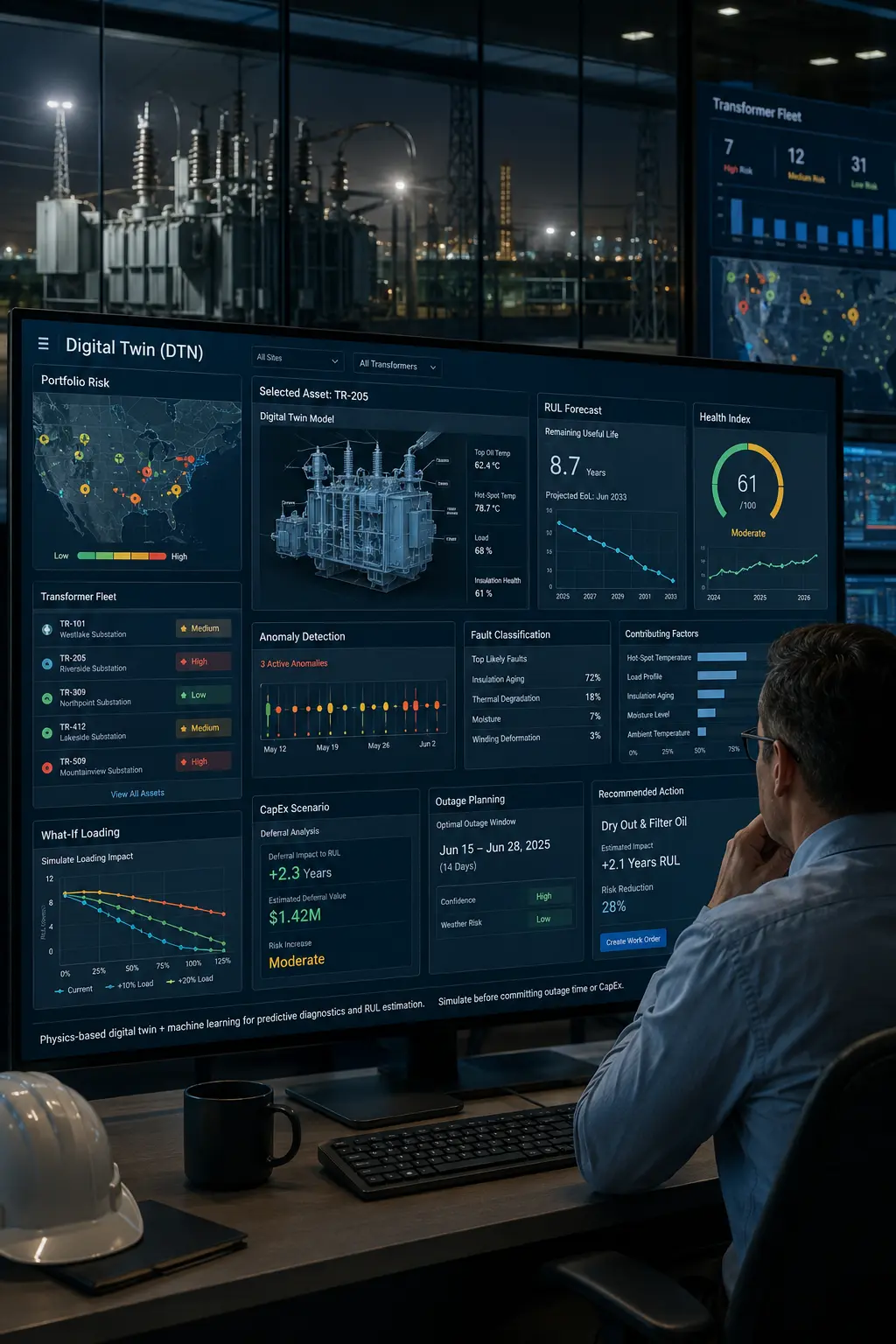
RM EYE’s Digital Twin builds a physics-based, virtual replica of the physical asset, keeps it in constant sync with live telemetry and historical test records, and blends established engineering physics with machine learning to predict internal condition and support the next decision.
While you can’t put a sensor inside a winding or aging insulation, a twin can compute what’s happening inside, creating a virtual decision environment.
Every simulated result comes with the governing standard, calculation method, and limits behind it– no black-box score, no “just trust the number
With DTN, engineers can start from the asset’s current condition, explore various failure scenarios, and see what the consequences look like before the physical asset gets exposed to it.
See inside the asset.
Use virtual sensors and engineering models to estimate critical conditions where direct physical measurement is unavailable.
Start from reality, not assumptions.
Run simulations from the asset's current operating state rather than building every scenario from a theoretical baseline.
Ask “what if?” before acting.
Model changes in load, cooling, gas condition, maintenance, and operating conditions before making the physical decision.
Understand how today's operation affects tomorrow's life.
Evaluate aging rate, loss of life, and remaining life implications under different scenarios.
Look forward, not only backward.
Use short-term outlooks and condition forecasting to understand where key parameters may be heading.
Make the model explain itself.
Keep measured and computed values clearly distinguished and expose the methods, inputs, limits, and applicable standards behind the result.
Experience the asset spatially.
Use the 360° 3D twin, virtual sensor markers, and simulation playback to connect data with the physical equipment it represents.