Substation Automation
Connect protection, control, and monitoring into a coordinated automation environment built for faster, more visible operations.
Make Your Substation One Intelligent Ecosystem.

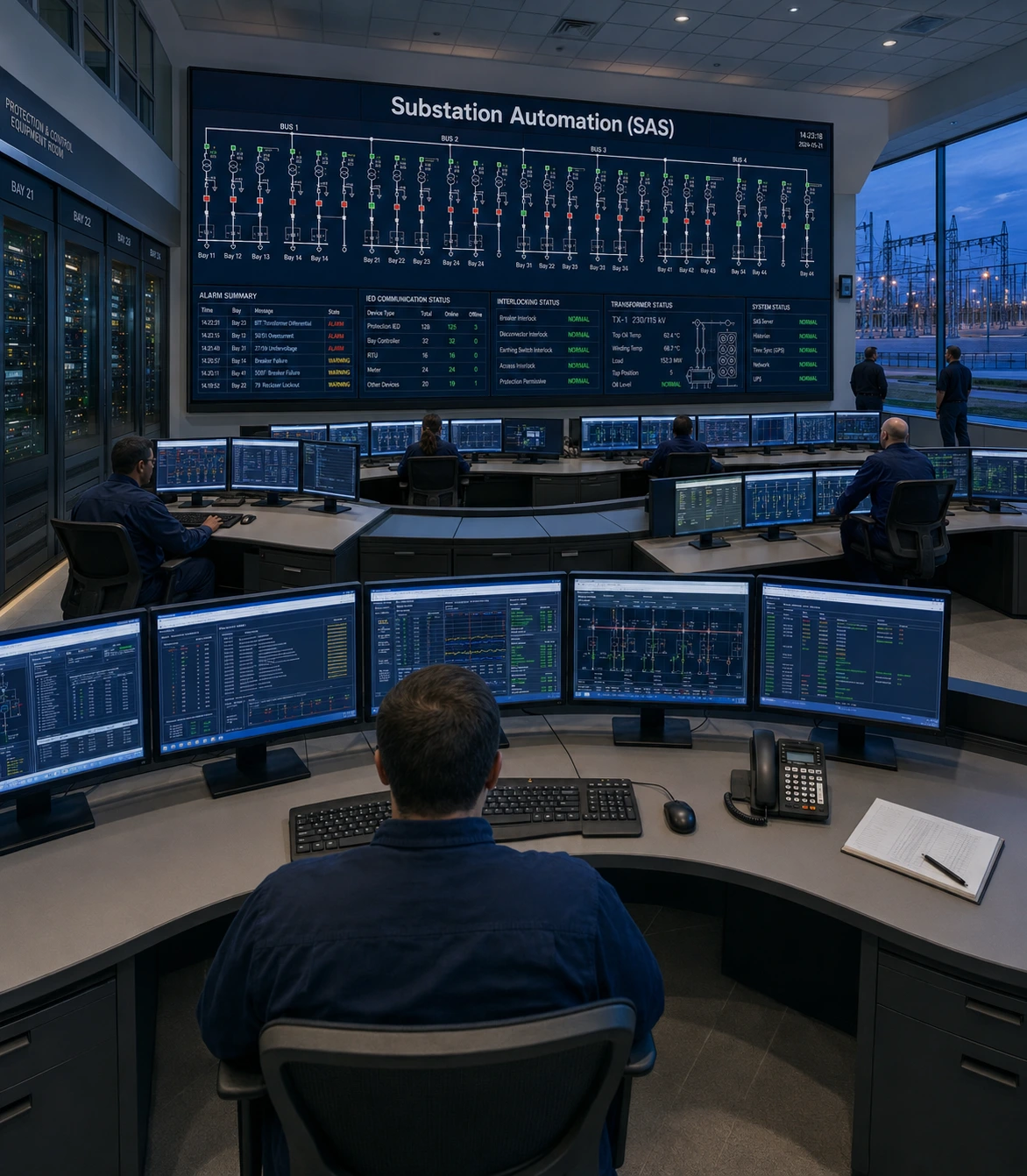
SAS unifies protection relays, bay controllers, and monitoring IEDs into a single automated architecture for high-speed IED-to-IED communication, coordinated protection, faster fault isolation, and centralized SCADA/HMI visibility.

Device-by-Device Isn't Enough

A substation full of individually managed relays and controllers is one where fault isolation depends on how fast someone can check each device by hand.

One Coordinated System

Bay level, substation level, and process level are unified into a single automation architecture, replacing device-by-device operation entirely.
From Connected Devices to Coordinated Intelligence.
From interlocking and switching to alarms and centralized visibility, SAS bridges what happens at the device level and what operators need to understand at the system level.

Connect the substation from device to system.

Bring protection, control, and monitoring IEDs into a coordinated operational architecture.

Coordinate critical actions.

Support high-speed device communication, protection interactions, and interlocking across the substation environment.

See the station as a whole.

Bring operational visibility together through centralized SCADA/HMI interaction rather than checking devices individually.

Automate repeatable sequences.

Support switching and interlocking logic designed to reduce unnecessary manual intervention.

Bring events into context.

Centralize alarms and relevant substation events for faster operational understanding.

Connect automation with asset intelligence.

Create a pathway between substation operational data and RM EYE's wider condition-monitoring and analytics capabilities.

One Substation. One Coordinated Response.
Accelerate operational response by bringing critical substation information into a coordinated environment.
Reduce device-by-device operational complexity.
Improve fault isolation and restoration workflows.
Increase visibility across protection, control, and monitoring systems.
Create a scalable automation foundation for evolving substations.
Connect operational events with the condition and lifecycle intelligence surrounding the assets involved.
Stop operating device-by-device. Shift to an ecosystem.