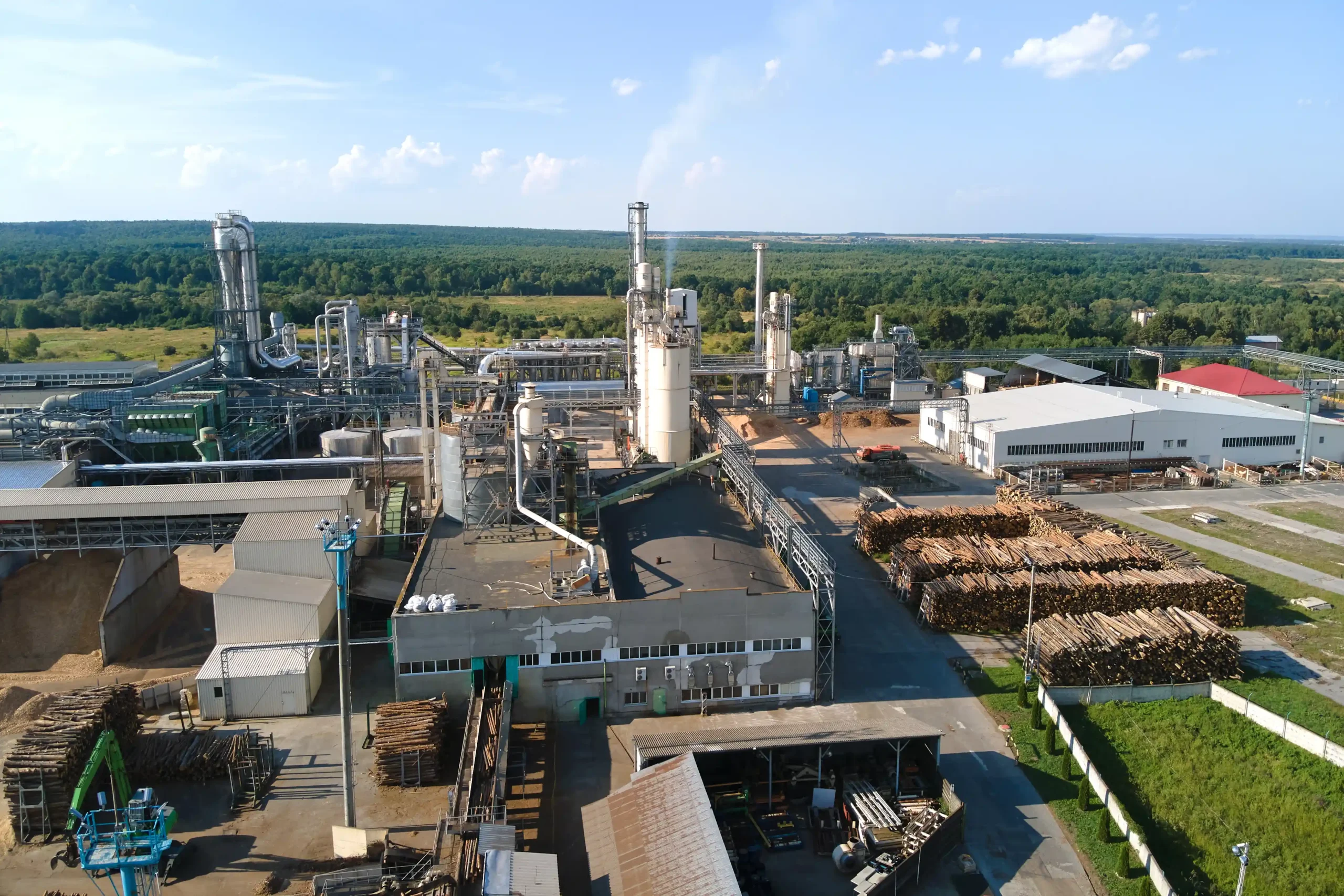
For OEM-driven industries like automotive, metals, pharmaceuticals, cement, and heavy manufacturing, power is not just a utility but a production dependency.
These facilities operate with high-load, process-critical electrical infrastructure, often supported by dedicated substations, captive power systems, or high-capacity grid connections. Any disruption in power quality or availability does not just impact operations, but also production, equipment, and finances.
In such environments, substation reliability becomes synonymous with operational continuity.
However, despite the criticality of these electrical networks, a significant number of OEM facilities still operate with limited real-time visibility into asset health.
According to industry studies (CIGRÉ, IEEE), over 60–70% of transformer and switchgear failures are preceded by detectable warning signs, thermal anomalies, insulation degradation, partial discharge activity, or gas-related deviations. The issue is not the absence of failure indicators but the inability to continuously observe and interpret them.
This disconnect creates a visibility gap in modern substations, impacting uptime, reliability, and operational efficiency across OEM industries.
How Traditional Monitoring Creates a Visibility Gap in OEM Substations?
Substation assets powering OEM facilities, including transformers, switchgear, circuit breakers, and cables, are engineered to operate within defined thermal, dielectric, and mechanical limits. However, in industrial environments, these assets are exposed to far more dynamic conditions than originally anticipated.
These include:
- Cyclic and peak loading driven by production schedules
- Frequent load fluctuations from process equipment
- Harmonics and transients from drives, furnaces, and converters
- Ambient and environmental stress (dust, heat, humidity, contamination)
- Frequent switching operations in automated systems
Despite this complexity, most substations in OEM facilities are still monitored through:
- Discrete measurement points (e.g., oil temperature indicators, pressure switches)
- Threshold-based protection systems
- Periodic offline diagnostics (DGA, thermography, insulation testing)
This creates a fundamental limitation where:
Asset conditions are inferred intermittently rather than observed continuously.
As a result, critical degradation mechanisms evolve unnoticed between inspection intervals, including:
- Thermal aging of insulation (Arrhenius-driven degradation)
- Partial discharge erosion in dielectric systems
- Moisture ingress reducing dielectric strength
- SF₆ density loss impacting insulation and arc quenching
- Contact resistance increase leading to localized heating
In high-load industrial environments, these are not slow-moving risks, but they can accelerate rapidly under production stress.
Without continuous visibility, these mechanisms accumulate until they manifest in catastrophic failures. For OEM facilities, this translates directly into maximum downtime and high-cost interventions.
Why OEMs need real-time electrical asset monitoring?
For OEMs, the challenge extends beyond preventing failures. It is about understanding how assets behave under real operating conditions, quantifying degradation as it occurs, and intervening before performance is compromised. Intermittent data and threshold-based alarms are insufficient for this level of control.
Real-time predictive monitoring addresses this gap by converting asset behavior into continuous, actionable intelligence. Instead of reacting to end-stage failures, it enables OEMs and operators to track evolving stress, identify early deviations, and intervene at the right time, before functional performance is compromised.
-
Closing the Gap Between Design and Field Performance
Electrical assets in OEM substations are designed for specific operating envelopes. However, real-world conditions in industrial environments often exceed or fluctuate beyond these limits.
Real-time monitoring enables:
-
-
- Continuous validation of asset performance under actual load conditions
- Identification of deviations from thermal and dielectric limits
- Quantification of cumulative stress on insulation and components
-
For OEM facilities, this ensures that assets are not just operating, but operating within safe and sustainable limits, even under aggressive production demands.
-
Moving Beyond Threshold-Based Protection
Traditional protection systems are designed to act when failure is imminent. Real-time monitoring systems, on the other hand, are designed to detect early-stage degradation.
For instance:
-
- A pressure switch in GIS may trigger at a critical SF₆ density drop
- A monitoring system detects gradual density decline trends weeks or months earlier
This distinction is critical.
Protection prevents damage. Monitoring prevents failure.
OEM electrical asset monitoring bridges this gap by providing continuous, trend-based insight rather than binary alarms.
-
Enabling Predictive Maintenance at Scale
OEM industries cannot afford to rely solely on fixed-schedule maintenance.
Predictive maintenance, driven by continuous monitoring, enables:
-
- Maintenance based on actual asset condition
- Early intervention before production impact
- Optimization of shutdown planning
Industry studies show that predictive maintenance can result in:
-
- 20–40% reduction in maintenance costs
- 30–50% reduction in unplanned downtime
For OEM facilities, this directly translates into:
-
- Higher production efficiency
- Reduced operational risk
- Improved asset utilization
-
Eliminating Data Silos in Digital Substations
One of the most persistent challenges in substations is fragmented visibility.
Different assets generate different datasets, often stored in isolated systems:
-
- Transformer DGA systems
- GIS density monitoring
- Thermal monitoring systems
- Protection relays
Without integration, cross-parameter insights are lost.
For example:
A temperature rise in a transformer may correlate with loading patterns, cooling inefficiencies, and insulation degradation, but without integrated monitoring, these remain disconnected observations.
By implementing integrated real-time monitoring, OEM facilities can:
-
- Contextualized across assets
- Correlated across parameters
- Actionable at the system level
This is foundational to OEM digital asset monitoring in modern substations.
-
Enabling Digitalization of Industrial Power Infrastructure
OEM industries are actively adopting digitalization across manufacturing processes, but electrical infrastructure often remains under-digitized.
Real-time monitoring enables substations to become:
-
- Data-driven systems rather than passive infrastructure
- Integrated with SCADA, APM, and enterprise platforms
- Capable of remote monitoring and diagnostics
This supports:
-
- Centralized visibility across multiple facilities
- Faster decision-making
- Improved operational coordination
In effect, it aligns electrical infrastructure with the broader digital transformation of industrial operations.
The Strategic Risk of Inaction
The reliability of OEM industries is fundamentally tied to the reliability of their electrical infrastructure.
Modern substations can no longer operate as black boxes with limited visibility. They must evolve into continuously monitored, data-driven systems capable of supporting uninterrupted industrial operations.
For OEMs, real-time asset monitoring provides the means to:
- Continuous insight into asset health
- Predictive maintenance strategies
- Integration into digital industrial ecosystems
- Improved uptime and operational resilience
In this context, real-time electrical asset monitoring becomes the fundamental requirement for modern power systems.
Want to eliminate blind spots in your substation and move toward predictive maintenance?
Explore Rugged Monitoring’s end-to-end monitoring ecosystem for OEM industries:
https://www.ruggedmonitoring.com/solution-by-industry/oem/