


Transformer Fiber Optic Hotspot Monitoring

Real-time insights for accurate failure prevention

Fiber optic hotspot monitoring of windings for accurate temperature risk control

Why Fiber Optic Hotspot Monitoring Is Critical?

Transformer hotspot temperature is the single most critical indicator of insulation aging and transformer life consumption. Undetected hotspot overheating accelerates insulation degradation, reduces transformer lifespan, and significantly increases the risk of catastrophic failure. As load patterns become more dynamic due to renewable integration, electrification, and peak-demand events, traditional thermal models often fail to accurately reflect real hotspot behavior. Fiber optic hotspot monitoring eliminates uncertainty by measuring temperature inside the transformer rather than inferring it.

Additionally, transformer hotspot measurement also provides true thermal visibility, enabling safe loading decisions, accurate life assessment, and early detection of abnormal heating caused by cooling inefficiencies, winding displacement, or localized defects.

What are the types of fiber optic hotspot monitoring?

GaAs-Based Fiber Optic Hotspot Monitoring

This monitoring method uses sensors with Gallium Arsenide (GaAs) to provide highly accurate, drift-free temperature measurements with a fast response time. Their semiconductor-based sensing principle ensures long-term stability and immunity to electromagnetic interference, making them ideal for high-voltage transformer environments.

Fluorescence-Based Fiber Optic Hotspot Monitoring

In this method, fluorescence-based sensors measure temperature by analyzing fluorescence decay time, delivering exceptional accuracy and repeatability. These sensors are completely passive, electrically non-conductive, and immune to EMI, ensuring safe, reliable operation inside transformer windings.

Both technologies enable true fiber-optic hotspot measurement, not merely inferred temperature estimation.

TRANSFORM YOUR TEMPERATURE MONITORING STRATEGY

Learn from real-world case studies

RM’s Highly Accurate Fiber Optic Hotspot Monitoring System

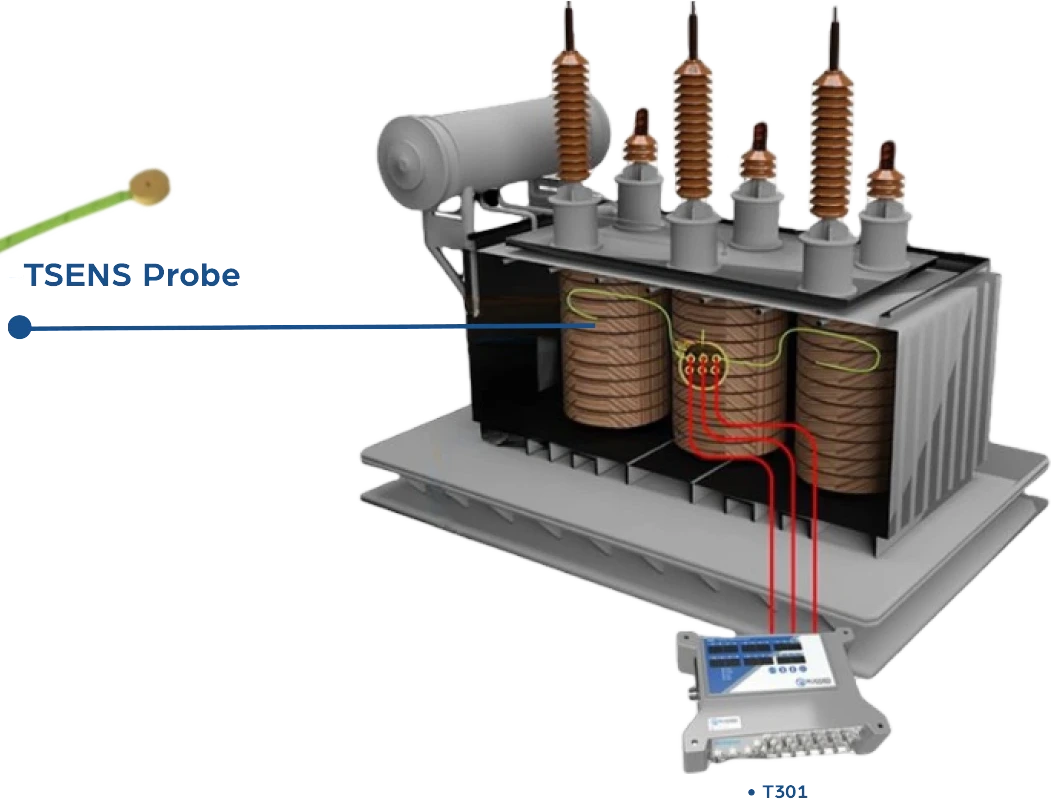
RM’s Transformer Hotspot Monitoring Solution delivers end-to-end thermal intelligence by directly measuring winding hotspot temperatures and converting that data into actionable operational insight. The process begins with the installation of GaAs- or fluorescence-based fiber optic hotspot sensors embedded within transformer windings, where the highest thermal stress occurs. These passive, EMI-immune sensors capture true hotspot temperature in real time, eliminating reliance on calculated or inferred values.

Temperature data from the sensors is continuously acquired by high-precision monitoring units, which ensure accurate signal processing, time synchronization, and reliable data transmission under live operating conditions. This data is then securely streamed to RM EYE, Rugged Monitoring’s enterprise analytics platform, where hotspot trends are analyzed alongside load behavior and historical performance.

RM EYE applies contextual analytics to identify abnormal heating patterns, assess insulation aging rates, and generate predictive insights. Operators gain real-time visibility, long-term trend analysis, and intelligent alerts, enabling safer loading decisions, optimized maintenance planning, and proactive management of transformer thermal risk.

The Complete Transformer Hotspot Monitoring Solution

Advantages of RM’s intelligent predictive maintenance

ACCURATE MEASUREMENT

Direct measurement using GaAs and fluorescence-based fiber-optic sensors captures the hottest points inside transformer windings. This eliminates uncertainty associated with calculated hotspot models and surface temperature estimation.

IMPROVED TRANSFORMER LIFE

Continuous hotspot monitoring prevents prolonged exposure to excessive thermal stress, slowing insulation aging. By operating transformers within safe thermal limits, asset life is extended, and replacement costs are deferred.

MAXIMIZED SAFETY

Real-time hotspot visibility enables confident loading and short-term overload decisions based on actual thermal behavior. Utilities can maximize asset utilization without compromising insulation integrity or safety.

EARLY FAULT DETECTION

Hotspot trends reveal cooling inefficiencies, winding displacement, or localized defects before they escalate. Early intervention reduces the risk of failure, unplanned outages, and emergency maintenance.

Our Transformer Hotspot Monitoring Stack

IIoT Sensors

GaAs and fluorescence-based fiber-optic sensors directly measure true winding-hotspot temperatures with high accuracy.
Edge Devices

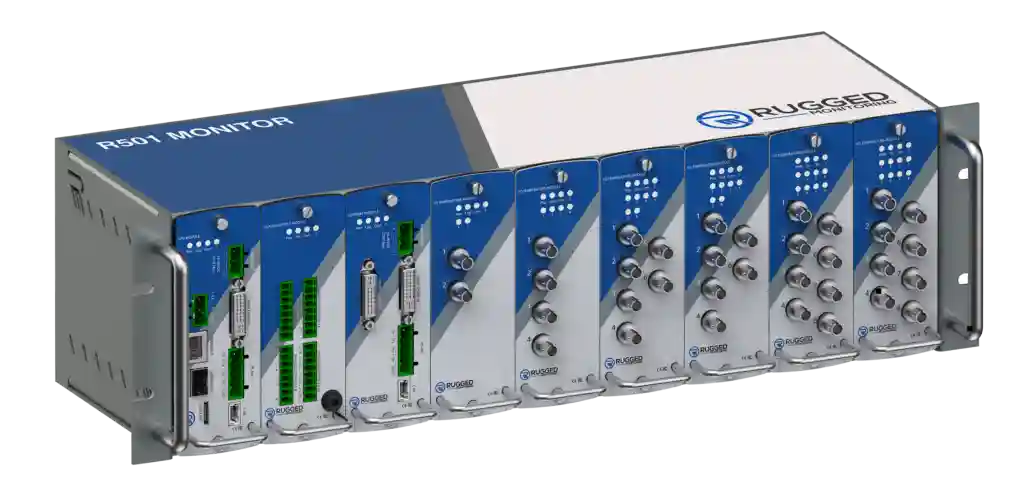
High-precision monitoring units acquire, process, and transmit hotspot temperature data reliably from live transformers.
Enterprise APM RM EYE

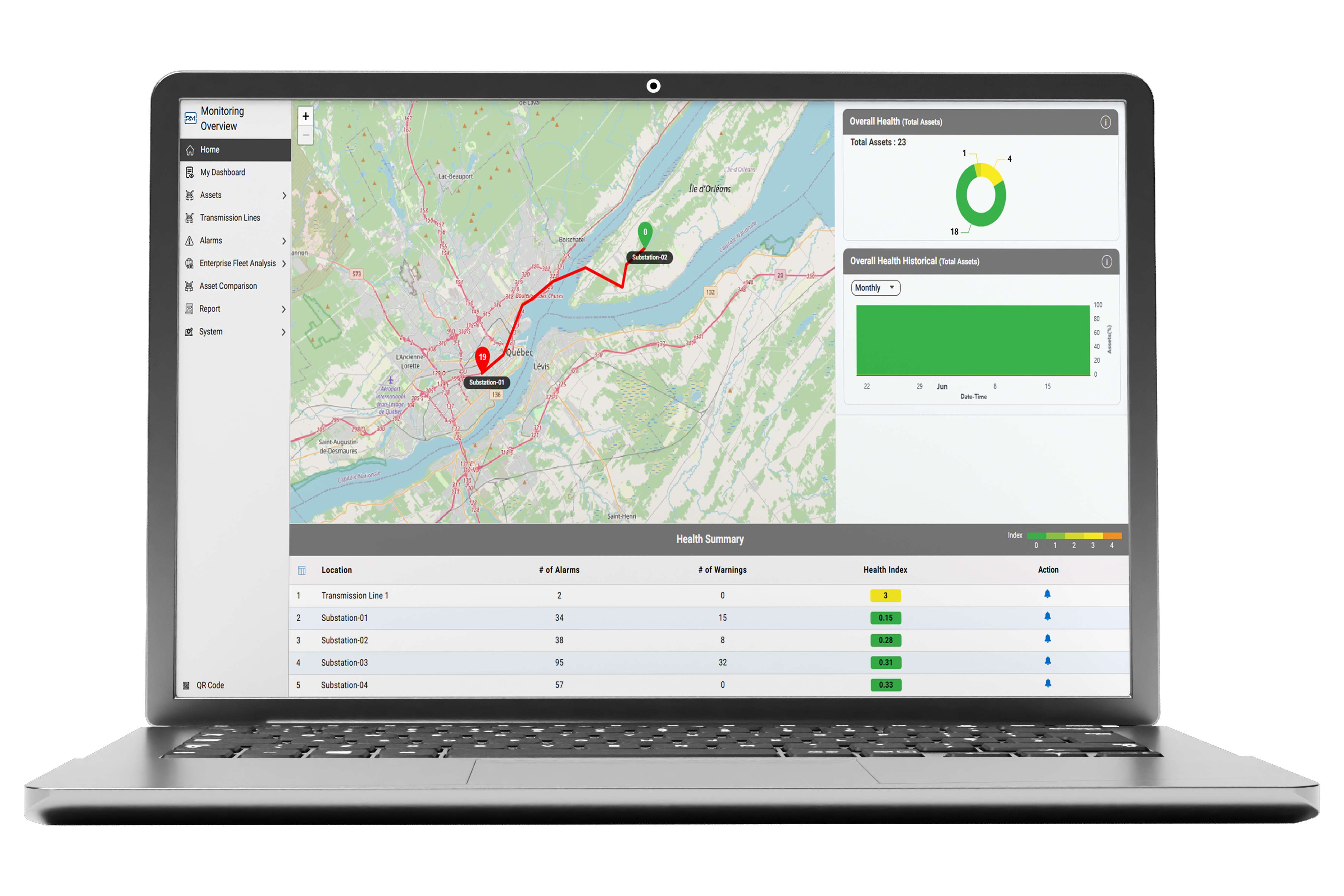
RM EYE analyzes hotspot trends, correlates load behavior, and delivers predictive thermal insights across transformer fleets.

FAQs

  • What is transformer hotspot monitoring?
    Transformer hotspot monitoring measures the actual hottest points inside windings to assess insulation aging and thermal risk.
  • Why is direct hotspot measurement better than calculated methods?
    Direct measurement captures real thermal stress, while calculated models rely on assumptions and may miss localized overheating.
  • Can hotspot monitoring be retrofitted to existing transformers?
    Yes. Fiber optic hotspot sensors can be installed during manufacturing or retrofitted during major transformer overhauls.
  • How does hotspot monitoring support predictive maintenance?
    By tracking temperature trends over time, utilities can identify abnormal heating early and proactively plan maintenance.
Connect with Our Expert

Have questions or need more information? Reach out to us for reliable Rugged Monitoring solutions.