
For years, most utilities and industries have treated electrical asset monitoring in substations as separate entities. Though initially effective, over time, the invisibility of a combined view will affect the way operators monitor grid health and performance. Such siloed asset monitoring, combined with traditional systems, increases downtime and maintenance costs, further reducing their ROI.
This is the reason why the current market value of integrated predictive maintenance systems has tripled, growing at a CAGR of 12.2% from 2025 to 2030. This current wave enables organizations to maintain a real-time, continuous view across their entire electrical asset fleet. This shift, combined with accelerated grid modernization initiatives, ESG goals, and regulatory pressure, has created a need for centralized platforms like APM.
In this blog, we will explore why siloed electrical assets no longer work, the shift from siloed to integrated condition monitoring, and the benefits of asset performance management (APM).
What is siloed electrical asset monitoring?
Monitoring the health, performance, and operations of electrical assets as standalone equipment, without integrating them with other assets in the substation or with data, is known as siloed monitoring. This approach emerged when energy demand was lower, and substation assets operated mainly independently.
However, with the rising demand for energy and the proliferation of more interconnected systems, such siloed electrical asset monitoring resulted in:
- Operational disconnection– Utilities often lack awareness of cascading issues that could impact nearby assets. This is due to their monitoring systems not being integrated or configured to communicate effectively with one another. Such disconnection can lead to unrecognized vulnerabilities and potential failures in the broader substation infrastructure.
- Complex strategies– Monitoring multiple assets on individual systems can create complex maintenance strategies because of isolated dashboards, proprietary environments, non-shareable data, and maintenance overlap.
- Maintenance that lacks insight– When each electrical asset of a substation has its own monitoring software, it creates a complex data environment. Additionally, data migration from one system to another often results in data loss, further affecting electrical asset monitoring.
These reasons are precisely the problem when it comes to ensuring safe and reliable substation monitoring.
But how ineffective is siloed electrical asset monitoring?
-
When monitoring systems continue to operate in isolation from other assets in a substation, operators become aware of only fragmented information.
-
- Inability to recognize early warning patterns, increasing unplanned downtime, and operational uncertainty.
-
Data from electrical assets comes in multiple formats, and when stored on disjointed platforms, it limits data harmonization, trend analysis, and long-term asset health benchmarking.
-
- Operators lack awareness of failures across fleets and maintenance priorities, increasing maintenance costs, and operational inefficiency.
-
Every siloed electrical asset monitoring system introduces new operational and cybersecurity risks to the substation due to multiple logins, dashboards, and access points.
-
- Risk of the entire substation going down due to cyber threat exposure and non-compliance with industry standards.
-
Siloed asset monitoring often mirrors reactive maintenance strategies- either overachieving or underachieving.
-
- Such siloed maintenance increases the costs and downtime for the entire substation.
As substations become more complex and scalable, siloed electrical asset monitoring no longer works. Additionally, in industries grappling with aging infrastructure and workforce challenges, the need for integrated condition monitoring increases.
How to Move from Siloed Monitoring to Integrated APM
The transition from siloed monitoring to an integrated system is a strategic grid modernization initiative. Organizations must build a scalable framework that connects all the siloed electrical assets, their data systems, and decision-making into one unified ecosystem. This shift usually occurs in three strategic phases:
PHASE 1: DATA INTEROPERABILITY
The initial phase of building a centralized data analytics platform focuses on data interoperability. This requires integrating and standardizing data from disparate, siloed electrical asset monitoring systems into a unified, cloud-based architecture. While doing so, organizations must also consider the following factors:
- The ease of integration with existing systems, ensuring minimal disruption.
- The capability for data migration that safeguards data integrity and minimizes loss.
- The availability of open protocols that promote interoperability.
The goal of data interoperability is not analytics but data readiness. Once it is established, the shift from siloed electrical assets to a consistent, standardized digital system becomes easier.
PHASE 2: REAL-TIME & REMOTE MONITORING
The next stage is to ensure real-time, remote access to all critical assets in a substation. This means moving from periodic manual inspections to a reactive condition monitoring approach that ensures the continuous availability and reliability of electrical assets.
With real-time and remote electrical asset condition monitoring, organizations gain:
- Access to remote diagnostics and troubleshooting
- Early warning signs of critical asset behavior, such as insulation degradation and thermal hotspots
- Event correlation between electrical assets
- Real-time electrical asset assessment
Thus, operators no longer depend on delayed remotes or on-site inspections in harsh conditions, enabling safer, more efficient maintenance.
PHASE 3: ASSET PERFORMANCE MANAGEMENT (APM)
Among the leading solutions that facilitate the transition from condition monitoring to predictive maintenance are APM systems. AI/ML algorithms, digital twins, and data-driven insights improve data visibility and optimize asset efficiency.
Additionally, APM consolidates electrical asset monitoring across multiple sites into a single enterprise-level view, optimizing maintenance and modernizing the grid.
- Real-time monitoring
- Data-driven analytics
- AI-enabled insights
- Customizable alarms and alerts
- Intuitive dashboards
Thus, empowering operators and asset experts with maintenance beyond what is happening to what will happen and what action to take.
The Benefits of Integrated Asset Performance Management System
By advancing all three phases, organizations transform their electrical asset monitoring strategy from fragmented to predictive, digitalized, and future ready.
- Minimized Unplanned Downtime- With an integrated APM system, organizations can predict faults early on, reducing the cost of maintenance and unplanned downtime.
- Improved Asset Reliability- Continuous visibility into integrated asset risks helps prevent catastrophic failures, making the asset more available and reliable.
- Optimized CapEx and OpEx- With APM, organizations can prioritize budgets based on data-driven analytics and not assumptions. This shifts their focus to maintenance efforts where they are needed most.
- Extended Asset Longevity- APM’s advanced health and performance indicators help organizations slow asset degradation and improve electrical asset ROI.
- Unified Data Governance- APM provides organizations with standardized reporting, analytics, and industry compliance across all their electrical asset monitoring needs.
- Operational Efficiency and Workforce Enablement- With a centralized monitoring platform, organizations have a streamlined system of tools and faster decision-making authority. This also reduces the number of manual tasks required, further eliminating the chances of human-prone errors.
APM platforms benefit beyond just integrated electrical assets. They accelerate the substation’s ability to scale, govern, and digitalize in line with demand. This increasing demand for APM systems across industries is supported by a report from MarketsandMarkets.
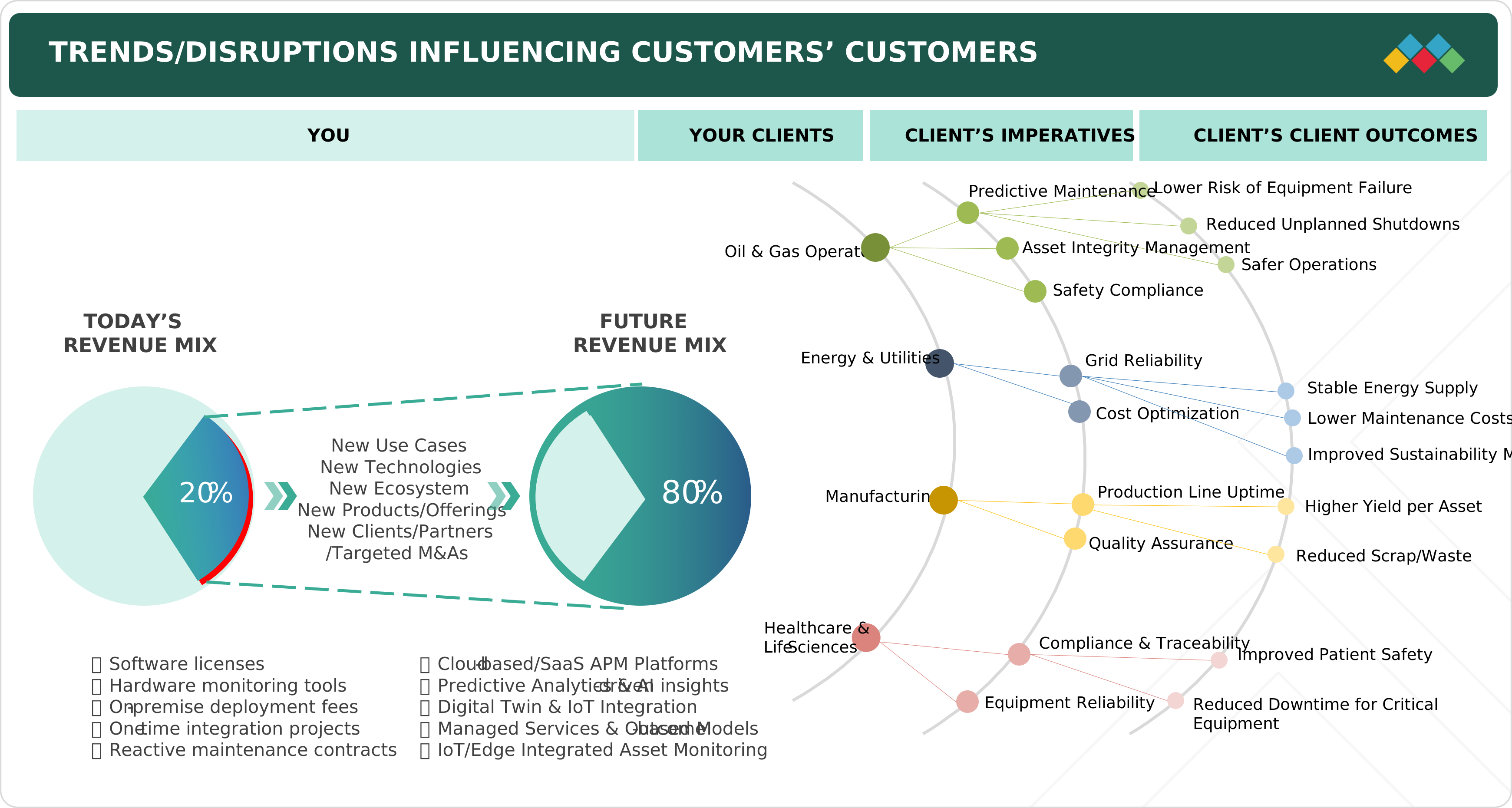
Reference: Asset Performance Management Market- Published on Oct 2025
By shifting from siloed electrical asset monitoring to an integrated system, utilities and industries secure their future as smart, resilient, and sustainable organizations.
Rugged Monitoring’s APM RM EYE
Rugged Monitoring’s AI-powered Aset Performance Management (APM) system, RM EYE, is designed to transform how industries monitor and manage critical assets. Built for enterprises seeking real-time insights and enhanced operational efficiency, RM EYE combines advanced AI-driven analytics, intuitive interfaces, and seamless scalability to provide a comprehensive overview of electrical asset health.
From power transformers to renewable energy systems, RM EYE ensures precise, data-driven decision-making, helping businesses optimize electrical asset performance, reduce downtime, and extend the asset lifespan. With RM EYE, organizations can embrace a smarter, more connected approach to monitoring and management.
Learn more on how RM EYE can empower your digital transformation