Gas-insulated switchgears (GIS) are widely popular for their compact size, lower initial costs, and high-performance insulation for high-voltage equipment. A major reason for this reliability is the use of sulfur hexafluoride (SF6) as the insulating medium, which possesses exceptional dielectric strength and arc quenching. Thus, making GIS an indispensable asset in the modern power network compared to AIS.
In recent years, the debate over maintenance vs. replacement of GIS due to SF6 failures has become increasingly important. Gas leaks, pressure changes, moisture ingress, and contamination compromise its insulation performance and increase the risk of failure. Additionally, regulations on the use of SF6, a potent greenhouse gas, have contributed to utilities’ efforts to replace the assets.
In this blog, we will discuss why replacement is not the problem, but the lack of prioritization, the importance of SF6 monitoring, and its role in ensuring substation reliability.
What is SF6 Gas Monitoring in Electrical Assets?
SF6 gas monitoring is the continuous real-time measurement and analysis of gas parameters within GIS and other SF6-insulated equipment, such as circuit breakers. Monitoring provides operational visibility into its health and performance, ensuring safe operation and arc interruption.
By deploying multiple sensors at critical points, data is collected continuously and processed by smart edge devices locally using advanced algorithms. This data is then securely communicated to centralized platforms such as asst performance management (APM) systems for advanced analysis. These systems utilize AI/ML algorithms, historical data, and health indicators to provide intelligent insights that help utilities move beyond just periodic inspections for SF6 monitoring.
The typical architecture of an IoT-enabled SF6 gas monitoring system for substations includes:
- Sensors installed on GIS compartments to measure density, pressure, temperature, and moisture.
- Edge data acquisition units that collect and preprocess sensor data.
- Communication infrastructure that transmits data to centralized monitoring platforms.
- Analytics software that detects anomalies and predicts potential failures.
This comprehensive ecosystem monitoring, from sensors to analytics, empowers utilities with predictive intelligence.
What Parameters Are Typically Monitored in SF6 Systems?
Effective SF6 condition-monitoring systems for GIS track multiple parameters to assess gas health and detect abnormal conditions. Each of these critical parameters provides different contexts to help understand, evaluate, and predict failures early on.
- Gas Density: Gas density is the most important indicator of insulation performance. Many systems implement SF6 gas density and temperature-compensated monitoring to ensure accurate readings regardless of ambient temperature variations.
- Gas Pressure: Pressure measurements provide an early indication of leaks. When correlated with temperature, pressure data help determine true gas density.
- Gas Temperature: Temperature compensation is necessary because SF6 density varies with temperature. Accurate monitoring ensures a reliable interpretation of the gas condition.
- Moisture Content: Moisture contamination lowers dielectric strength and can accelerate internal degradation.
- Leak Detection Indicators: Advanced systems support SF6 leak detection best practices in electrical assets, identifying gradual leaks through trend analysis.
Together, these parameters form the foundation of continuous SF6 gas health monitoring, ensuring early fault detection and minimizing asset downtime.
Why is SF6 Monitoring Critical for Substation Reliability?
In modern substations, SF6 gas is not limited to GIS alone. It is widely used across multiple high-voltage assets, including gas-insulated busbars, circuit breakers, current transformers (CTs), voltage transformers (VTs), and gas-insulated transmission lines (GIL). These components rely on the exceptional dielectric and arc-quenching properties of SF6 to maintain electrical insulation and safely interrupt fault currents.
Because these assets operate under high electrical stress and critical grid conditions, maintaining the correct SF6 gas density, purity, and pressure is essential for substation reliability. Any deviation in gas conditions can compromise insulation strength, reduce fault-interruption capability, and increase the risk of catastrophic failures.
For this reason, continuous SF6 monitoring in substations is crucial for ensuring operational reliability, environmental compliance, and long-term asset health.
Maintaining Insulation Integrity Across Gas-Insulated Equipment
The primary function of SF6 in substation equipment is to provide high-dielectric-strength insulation between energized conductors and grounded structures. This insulation capability depends heavily on maintaining the correct gas density and pressure within sealed compartments.
When SF6 gas leaks or its density drops below design thresholds, its dielectric strength significantly decreases. In high-voltage environments, this reduction can enable partial-discharge activity, surface tracking, or internal flashovers.
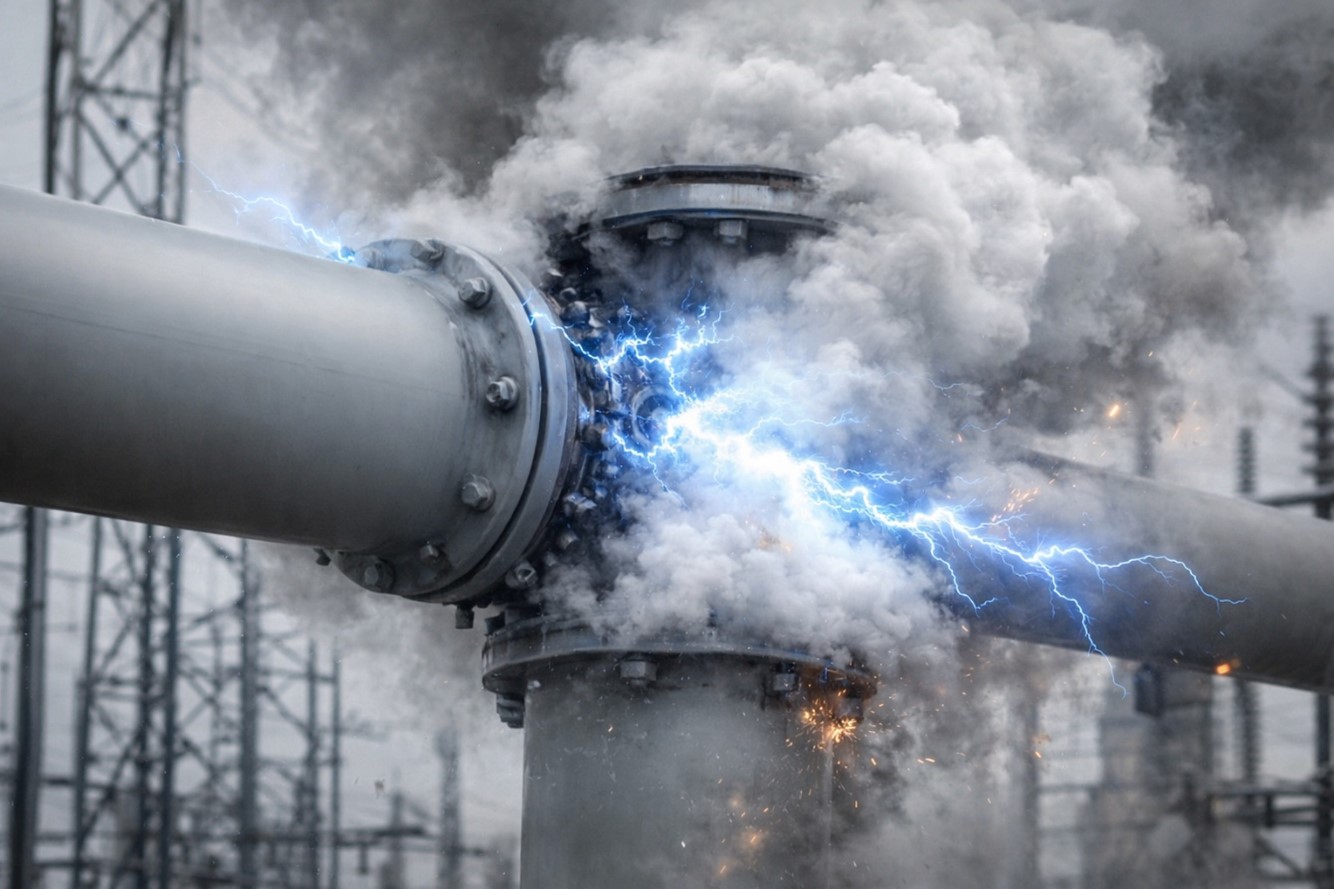
Continuous SF6 density and leak monitoring across GIS bays, circuit breakers, and gas-insulated compartments ensures that even minor gas losses are detected early. By maintaining proper insulation conditions, utilities can prevent degradation mechanisms from developing within the equipment.
Preventing Equipment Failure and Operational Disruptions
SF6 -insulated equipment is critical in switching operations, fault interruption, and network protection. In circuit breakers, for example, SF6 is responsible not only for insulation but also for extinguishing arcs during fault clearing.
If gas pressure or density drops beyond safe limits:
- Arc interruption capability can degrade
- Internal electrical clearances may no longer be sufficient
- Equipment may experience dielectric breakdown or arc flash events
These failures can lead to substation outages, equipment damage, and significant repair costs.
Through predictive SF6 monitoring, operators can detect gradual gas-loss trends or abnormal behavior long before operational limits are reached. This allows maintenance teams to address leaks or gas degradation during planned maintenance windows rather than during emergency conditions.
Ensuring Environmental Compliance and Emission Control
While SF6 offers exceptional technical performance, it is also recognized as one of the most potent greenhouse gases. Its global warming potential (GWP) is approximately 23,500 times that of CO2, making emissions management an important responsibility for utilities and grid operators.
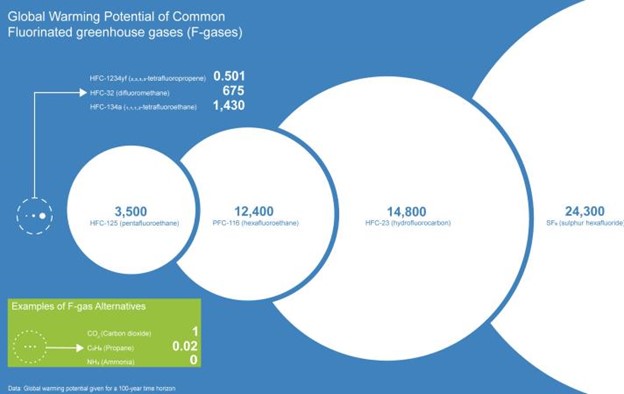
Image Source: About F-Gases [Published by the European Commission]
Substations often contain large quantities of SF6 distributed across multiple equipment compartments, and even small leaks over time can contribute to measurable emissions.
Continuous monitoring systems help utilities:
- Detect and repair leaks quickly
- Quantify gas losses across equipment
- Maintain accurate records for SF6 emissions monitoring and reporting requirements
- Support sustainability initiatives and environmental compliance programs
By implementing effective SF6 leak detection and monitoring strategies, utilities can significantly reduce their environmental footprint.
Supporting Long-Term Asset Reliability and Longevity
Gas-insulated equipment is typically designed for service lifetimes exceeding 30–40 years, if insulation conditions remain stable. However, undetected gas loss, contamination, or moisture ingress can accelerate internal degradation mechanisms.
Continuous SF6 condition monitoring provides early visibility into these changes by tracking trends in gas density, pressure, and temperature. This allows asset managers to detect abnormal patterns such as:
- Gradual leakage across seals or flanges
- Temperature-compensated density variations
- Long-term gas degradation within sealed compartments
With trend-based monitoring and analytics, utilities can take corrective action before insulation performance is compromised. This not only improves operational reliability but also extends the usable life of substation equipment, helping to defer costly replacements and improve overall asset management strategies.
In essence, SF₆ monitoring is a fundamental component of modern substation condition monitoring strategies. By providing continuous visibility into gas health across multiple assets, not just GIS, it enables utilities to maintain insulation reliability, prevent failures, manage environmental impact, and ensure the long-term performance of critical high-voltage infrastructure.