How India’s Top 5 Data Centers Are Preventing Downtime?
The shift from tradational to digitalization
With the rise of artificial intelligence, the need for data center reliability and availability has increased tremendously. This translates into how they are engineered and monitored. Rather than being designed to withstand failures, they are now engineered to anticipate and eliminate them in real-time.
This wave has also taken over the Indian sub-continent, surging its data center capacity from ~950 MW in 2024 to ~1500 MW by early 2026, as reported by KPMG.
As hyperscale demand accelerates nationwide, uptime expectations have moved beyond redundancy benchmarks such as Tier III or Tier IV. Today, operators are confronting a more complex reality: increasingly volatile grid conditions, higher power densities driven by AI workloads, and infrastructure operating closer to its thermal and electrical limits than ever before.
In this environment, downtime is no longer a question of if systems fail, but whether failure signals are identified early enough to prevent cascading impact.
Across India’s top data center campuses, from Gujarat’s GIFT City to the dense clusters of Navi Mumbai, a new design philosophy is emerging. One that shifts focus from static redundancy to continuous visibility, adaptive infrastructure, and predictive control.
Building the Shift from Data Center Redundancy to Resilience Engineering
Historically, uptime in data centers has been achieved through layered redundancy, such as dual feeds, backup generators, and failover systems. While these remain foundational, leading operators are now recognizing a critical limitation: redundancy reacts to failures, but it does not prevent them.
Facilities like Yotta G1 in GIFT City demonstrate how this thinking is evolving. The 8.2 lakh sq.ft., facility is built on a dedicated GIS-based utility and backed by dual 33 kV feeds routed through underground tunnels.
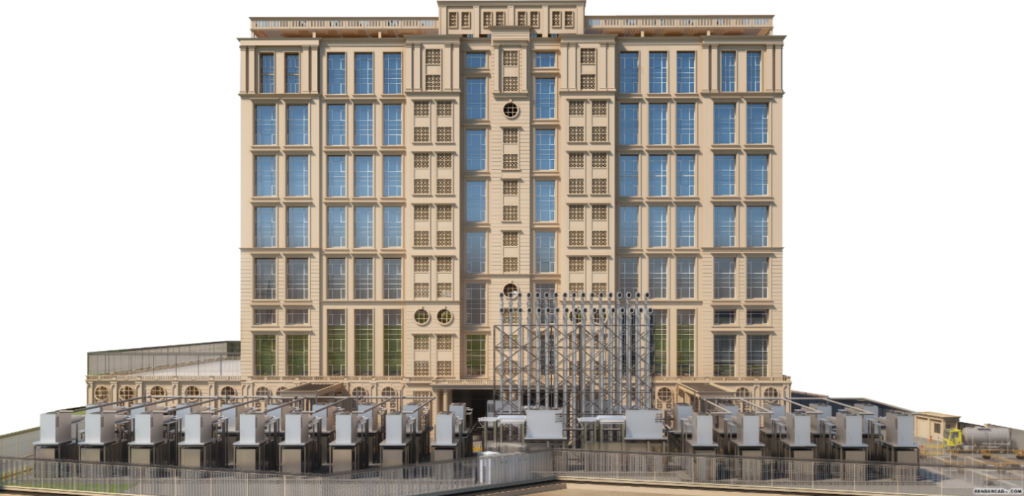
Image Source: http://colocation.yotta.com/
This design minimizes exposure to external disruptions and reflects a move toward controlled electrical environments, where variability is engineered out at the source.
Thus, reducing dependency on downstream protection mechanisms and stabilizing the system upstream, where failures typically originate.
Data Center’s Dependency on Power Grid Is Being Re-Architected, Not Eliminated
In high-density markets like Mumbai, complete independence from the grid is neither practical nor desirable. Instead, operators are re-architecting how they interact with it.
Sify’s Rabale campus and STT GDC’s Navi Mumbai facilities draw from multiple utility sources, including MSEDCL and MSETCL, creating grid diversity at the transmission level. This ensures that failures in one network segment do not propagate across the facility.
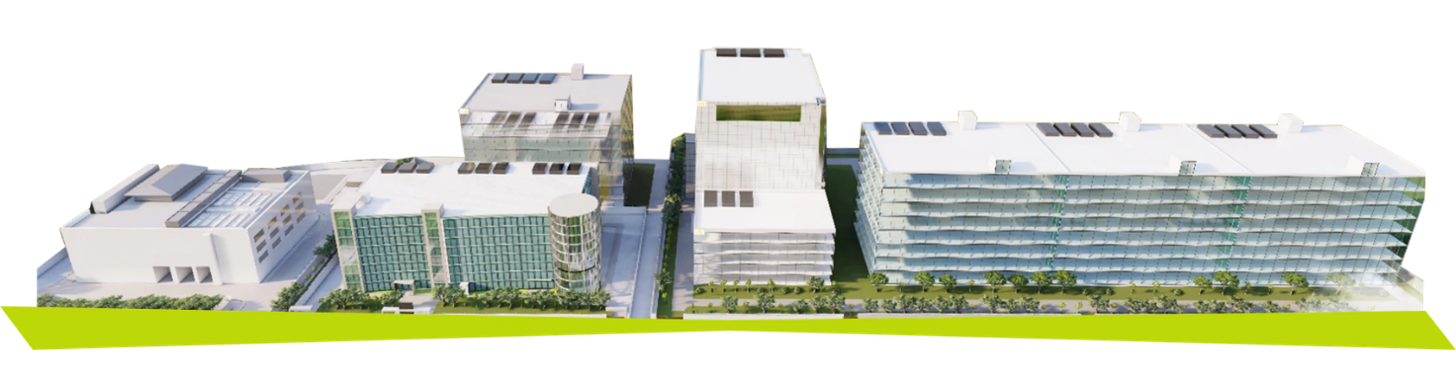
Image Source: https://www.sifytechnologies.com/data-center/rabale-data-center/
However, what is changing is not just the number of feeds, but the intelligence around them.
Dynamic load balancing, real-time feeder monitoring, and integration with renewable sources are enabling operators to actively manage power quality rather than passively receive it. The inclusion of nearly 100 MW of renewable energy in Sify’s ecosystem, for instance, is not just a sustainability initiative but also introduces energy-source diversification, which reduces systemic risk.
On-Site Infrastructure for Data Centers Is Becoming a Control Layer
If grid connectivity provides resilience, on-site infrastructure provides control.
CtrlS’s Navi Mumbai hyperscale park exemplifies this shift. Its proprietary GIS substation and large-scale solar integration are not simply backup mechanisms. They function as active control layers within the power architecture.
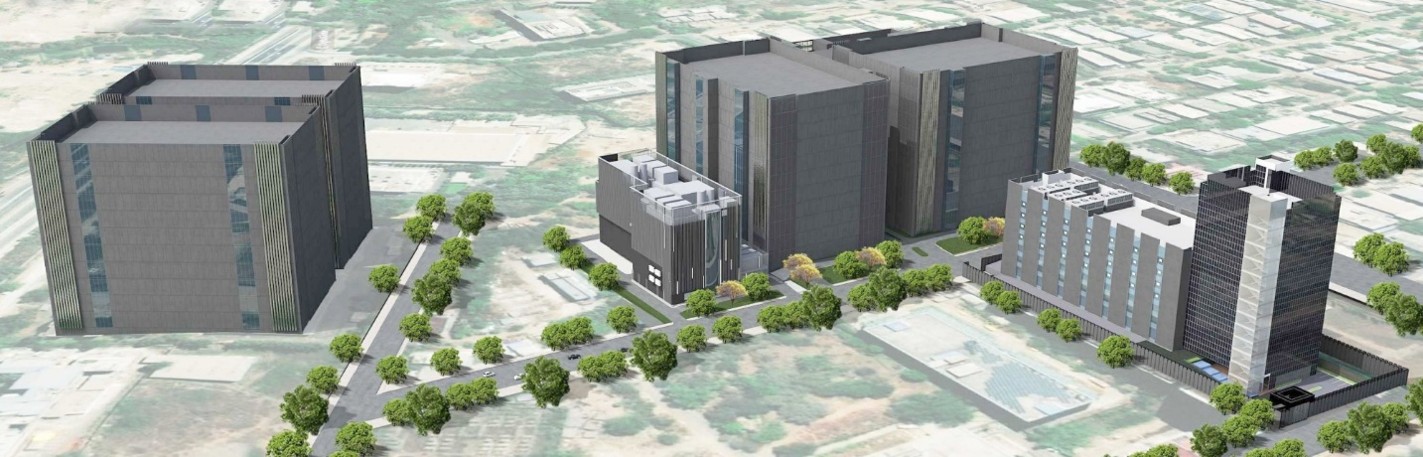
Image Source: https://www.ctrls.com/dc-visit-mumbai/
By owning and instrumenting critical infrastructure, operators can monitor parameters such as voltage stability, load fluctuations, and thermal stress in real time. This level of visibility enables faster decision-making and localized response, preventing minor anomalies from escalating into system-wide failures.
Similarly, STT GDC’s facilities, with dual 66 kV feeds and extended generator autonomy, are designed not just for redundancy but for operational endurance, ensuring stability even during prolonged external disruptions.
Despite advancements in infrastructure, the most significant shift is happening deeper within the system:
at the level of individual electrical assets.
Across these leading campuses, there is a growing recognition that most failures are not sudden events, but progressive conditions. Thermal stress in switchgear, insulation degradation in transformers, or partial discharge activity in GIS. These are early indicators that often go undetected in traditional monitoring frameworks.
Additionally, India’s top data centers recognize the costs of fragmented monitoring systems. And so, operators are increasingly deploying integrated monitoring systems that use high-resolution sensing and AI-driven analytics across substations and electrical networks. These systems provide continuous insight into asset health, enabling predictive maintenance strategies that intervene before faults occur.
Rather than relying on alarms triggered at failure thresholds, facilities are moving toward condition-based intelligence, where deviations are identified at inception.
As India’s data center capacity scales toward multi-gigawatt levels, the challenge is no longer just infrastructure expansion. It is operational precision at scale.
The next phase of reliability will not just be defined by how much redundancy is built, but by how effectively systems can interpret and act on data in real time.
In that sense, downtime is no longer purely an engineering issue. It is a visibility challenge.
And the operators who are solving it, through deeper asset intelligence, tighter system integration, and predictive control, are not just preventing outages. They are redefining what reliability means in the era of hyperscale digital infrastructure.
Talk to our Industry Expert today: https://www.ruggedmonitoring.com/contact-us/