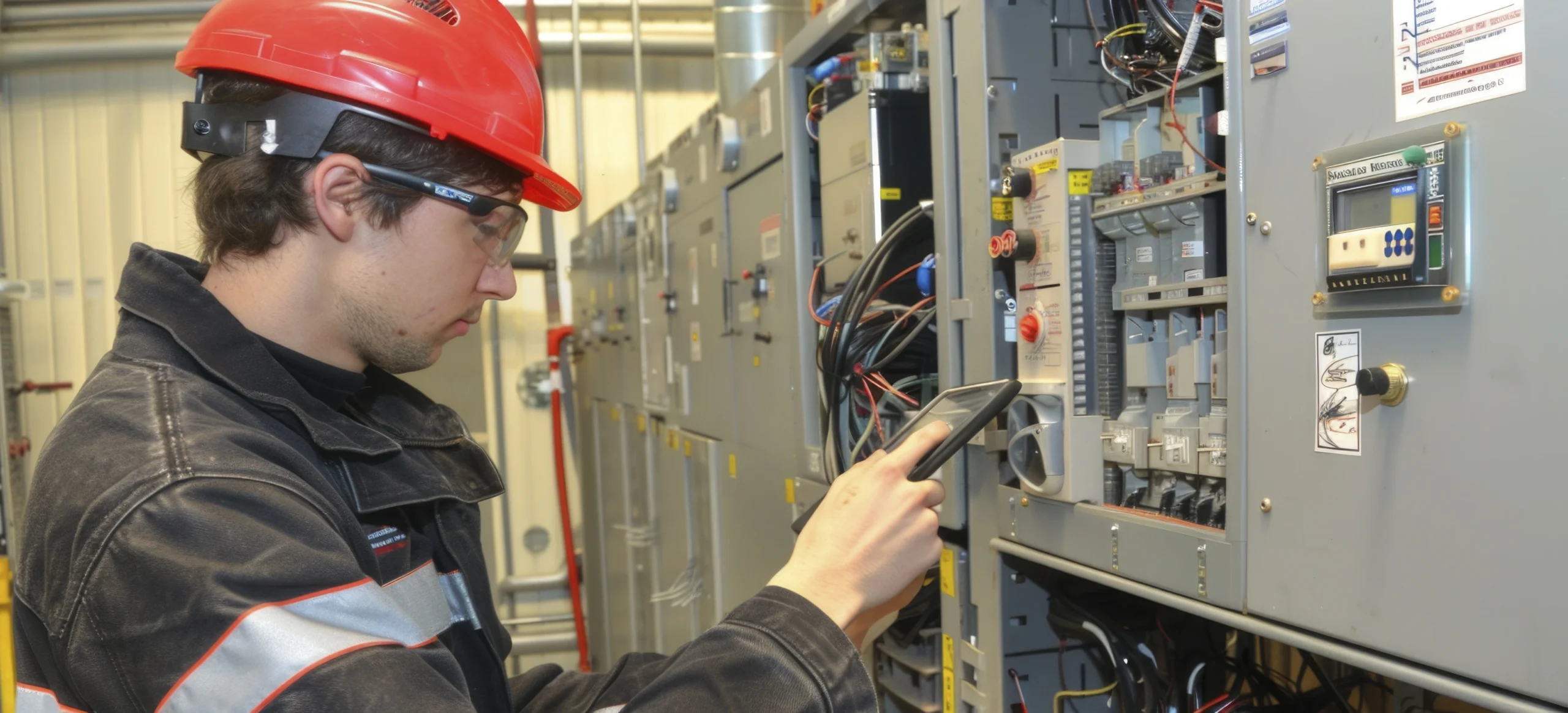
Given current trends and rising electricity demand, we recognize the critical importance of proactively detecting thermal hotspots in switchgear. Switchgear is central to ensuring continuity, safety, and stability in power distribution. Despite its critical importance, most utilities overlook the earliest forms of failure, hotspots. These localized heat sources often cause asset downtime and safety incidents, reducing the grid’s efficiency and availability.
In this technical deep dive, we will understand the physics behind thermal hotspots in switchgear, how to detect them effectively, and which monitoring strategy offers the highest reliability for grid modernization.
What Causes Thermal Hotspots in Switchgear?
A thermal hotspot is a localized area within the switchgear (AIS, GIS, or MV Panel) that exceeds the ambient temperature or its normal recorded value. This significant rise typically stems from increased electrical resistance, which can be defined by Joule’s First Law (also known as Joule Effect):
The Power Dissipated as Heat (P) is directly proportional to the square of current (I) and the resistance (R).
P= I2R
i.e., any small increase in resistance will cause a rapid, localized temperature spike due to the high current.
But what causes this increase in resistance, leading to thermal hotspots in switchgear?
- Loose connection or aging infrastructure: Poor contact surfaces increase the resistance, causing heat buildup at switchgear terminals, busbar joints, or breaker contacts.
- Overloading or Imbalances: Operation beyond the rated capacity will lead to conductors and other critical components overheating.
- Insulation Degradation: Mechanical and electrical stress over time will weaken the insulation, increasing the probability of thermal hotspots in switchgear.
- Environmental Factors: Oxidation, corrosion, or contamination can all be causes of contact resistance, maximizing heat dissipation.
- Asset Wear: Faulty components, breaker mechanisms, or current-carrying elements can degrade over time, generating thermal hotspots in switchgear.
Few issues pose a greater threat than just asset downtime, costing the utilities millions of dollars in operations and maintenance. Thus, for industries and utilities that rely heavily on switchgear reliability and efficiency, early detection of thermal hotspots is critical.
How to Detect Thermal Hotspots in Switchgear?
There are several techniques for monitoring thermal hotspots in switchgear. Each of these methods offers various levels of accuracy, coverage, and reliability. Below is a list of the most widely used detection methods, along with their strengths and weaknesses:
IR Thermography:
IR thermography is one of the most common and easiest methods of detecting hotspots. Using handheld or fixed IR cameras, infrared radiation emitted by the hot surfaces of switchgear is captured and converted into thermal images. These visual snapshots provide continuous visibility into surface-level fluctuations, offering a non-invasive and effective monitoring technique.
Strengths of IR Thermography:
- Non-contact method
- Offers both periodic and continuous inspections
- Identifies apparent temperature anomalies
- Useful for baseline assessment
Weaknesses of IR Thermography:
- Slower response compared to other contact methods
- Mainly for large asset fleets like substations
- Cannot detect internal hotspots
- Line-of-sight limitations
Contact Temperature Sensors:
Contact temperature sensors, such as RTDs or thermocouples, are installed directly at critical points to detect thermal hotspots in switchgear. Unlike IR thermography, which detects surface-level faults, contact sensors can provide accurate data on internal faults at busbars, cable joints, or connections. Though this method is cost-effective, it lacks reliability and accuracy in high-EMI environments.
Strengths of Contact Temperature Sensors:
- Higher accuracy than IR Thermography
- Reliable for long-term monitoring
- Very effective in controlled applications
Weaknesses of Contact Temperature Sensors:
- Installation complexities
- Not a retrofit solution
- Not reliable in high-voltage environments
Fiber Optic Sensing:
Fiber-optic (FO) temperature sensors are by far the most advanced and reliable method for monitoring thermal hotspots in switchgear. By embedding fiber-optic cables directly in critical components, operators can continuously measure temperature along the fiber length. With real-time visibility, rapid response times, and immunity to electromagnetic interference, FO sensors are ideal for mission-critical grid assets.
Strengths of Fiber Optic Temperature Sensors:
- High immunity
- No-recalibration
- Real-time, continuous monitoring
- Accurate for even the most minor hotspots
- Early fault detection
Weaknesses of Fiber-Optic Temperature Sensors:
- Can be more expensive than other methods
Which Technology Should You Choose?
| Technology | Coverage | Response Time | Accuracy | Real-Time | Safety | Best Use Case |
| Manual IR Camera | Low | Low | Medium | No | Medium | Periodic audits |
| Fixed IR Sensors | Medium | Seconds (with continuous) | Medium | Yes | High | Busbar surfaces |
| Contact Sensors | Point-based | Seconds (needs manual interventions) | High | Yes | High | Connections |
| Wireless Sensors | Point-based | Seconds | High | Yes | High | Retrofits |
| Fiber Optic Sensing | Distributed | Milliseconds (can be integrated with APM) | Very High | Yes | Very High | Critical switchgear & high-risk environments |
Implementing an Effective Thermal Monitoring System:
Installing a precise, reliable sensor is only the first step toward early detection of thermal hotspots in switchgear. As these faults rarely appear without a pattern, ensuring a continuous monitoring system is necessary. Unlike traditional sensors such as RTDs or thermocouples that only provide data, advanced IIoT-based fiber-optic sensing can be integrated with edge devices and APM to build a broader monitoring ecosystem. With asset performance management (APM) systems, data is collected in real time and analyzed for patterns and trends. Thus, enabling:
- Predictive maintenance
- Fault classification
- Automated alerts
- Fleet-wide asset visibility
Additionally, these thermal hotspots in switchgear data can be correlated with other parameters, such as partial discharge or load fluctuations, to ensure centralized visibility into asset behavior.
Rugged Monitoring’s Fiber Optic Hotspot Monitoring System
Rugged Monitoring’s fiber optic hotspot monitoring system employs highly accurate IIoT sensors to track assets in real-time continuously. This real-time data is securely transmitted to our advanced edge devices, which convert analog signals into digital inputs. By seamlessly integrating with our enterprise APM system, RM EYE analyzes this data using AI and machine learning algorithms to deliver actionable insights.
Check out our complete product portfolio here:
Rugged Monitoring’s Thermal Monitoring System:
Rugged Monitoring’s thermal monitoring system replaces periodic thermographic inspections with an automated, real-time monitoring framework. Using IR thermal imaging integrated into RM EYE, our system captures surface temperature patterns across critical switchgear components, improving time and supporting long-term reliability strategies.
A recent adoption of our thermal monitoring system by a private T&D company in India led to a 35% reduction in its overall maintenance costs and achieved a centralized grid modernization solution.
Find out how your utility can achieve switchgear digitalization: Case Study
Organizations pursuing digitalization, reliability-centered maintenance, or improved asset lifecycle management must integrate Rugged Monitoring’s end-to-end ecosystems to ensure safer operations, optimized performance, and long-term switchgear reliability.