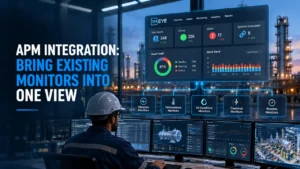
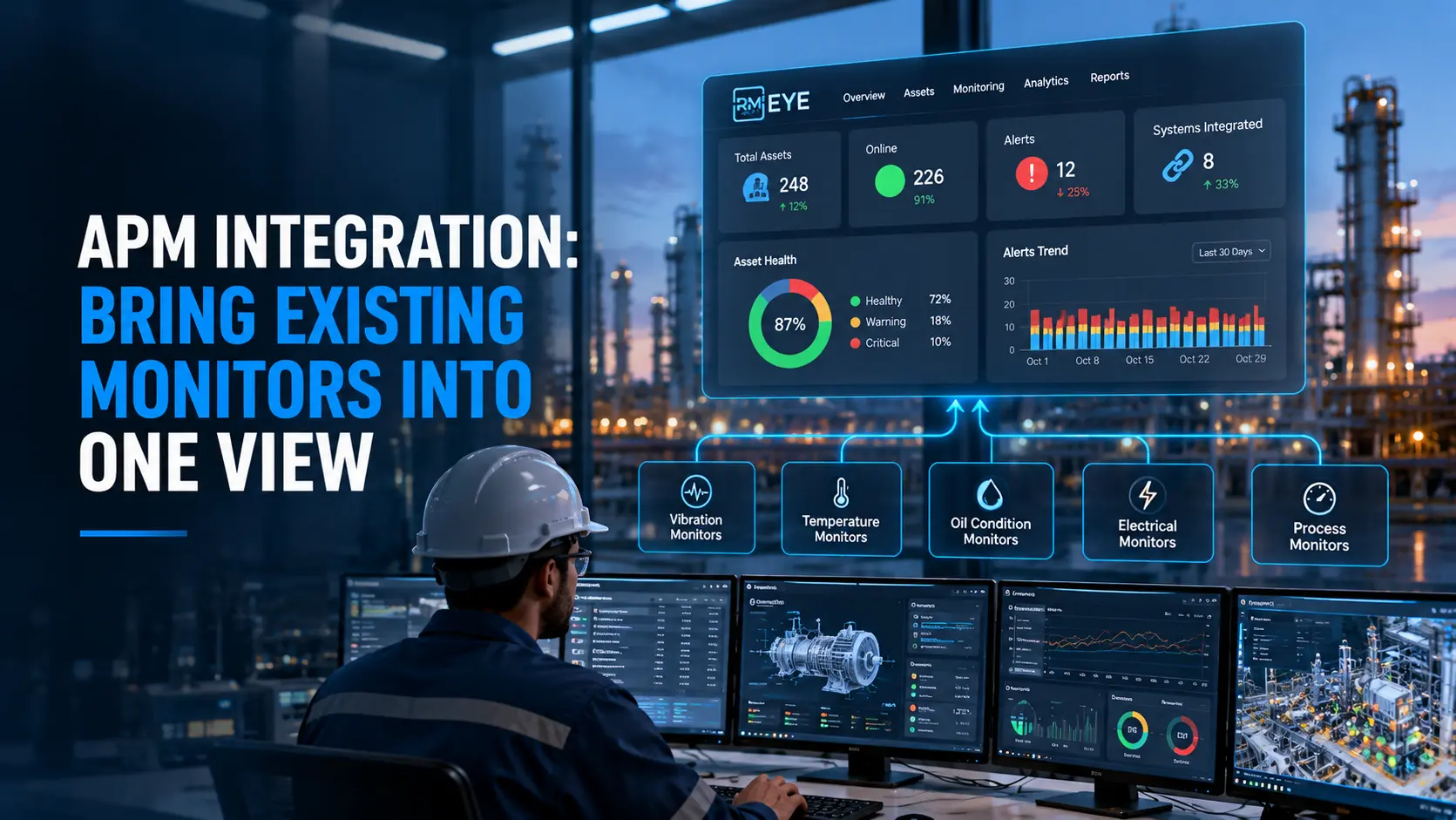
APM integration means bringing data from the monitors you already own, such as PD, DGA, temperature, and breaker monitors from different suppliers, into one platform. Each device keeps doing its job, but readings are mapped to a common asset list, units, and alarm levels. This gives teams one asset health dashboard instead of several disconnected views.
The challenge is therefore not always replacing existing monitors. It is making their data work together. If information is already spread across separate systems, see why siloed electrical asset monitoring makes condition assessment more difficult.
So, where should an integration project begin?
What should you inventory before APM integration?
Before connecting existing monitors to an APM platform, start with an inventory of what is installed, what it monitors, and what data it can provide. Different devices may use different interfaces, sampling rates, alarm settings, and naming conventions.
A simple integration inventory should capture:
| What to check | What to record |
| Asset | Site, asset ID and equipment being monitored |
| Monitor | Monitor type, vendor and model |
| Data interface | Available output or communication protocol |
| Sample rate | How frequently the device produces or updates data |
| Current alarms | Existing thresholds, alarm levels or condition states |
| Data owner | Team or system responsible for the data |
| Device status | Firmware version and support status |
This inventory shows what data is available and how it can be accessed. It also identifies older or unsupported devices that may need a different integration approach.
Which protocols and interfaces carry the data?
Existing monitors may expose their data through different communication interfaces. The appropriate interface depends on the source device, the information required, and the existing OT architecture.
IEC 61850 is widely used for communication and data models within power utility automation environments. Modbus provides a common way to exchange register-based device data. DNP3 is also found in utility and industrial control environments.
MQTT can support publish-subscribe data exchange in connected architectures, while older devices may rely on periodic file exports rather than a live communications interface.
The objective is not to force every monitor onto the same protocol. It is to identify a reliable path for bringing the required data into the integration layer.
How do you map data from different vendors into one asset model?
Connecting the devices is only the first step. Their data also needs a common structure, so the APM platform knows which measurement belongs to which asset.
A practical hierarchy can organize data as:
Site → Bay or system → Asset → Component → Measurement
For example, a temperature channel should map to the transformer and winding it represents rather than appear only as a device tag.
Consistent tag names, units, and timestamps then allow data from different monitoring systems to be aligned. Data-quality flags can identify readings that are missing, stale, or unavailable.
The IEC 61970-301 Common Information Model provides standardized information-model concepts for power-system data. The final asset model should still reflect the organization’s own equipment and monitoring structure.
How should alarms and health scores line up across vendors?
Different monitoring systems can describe the same level of concern in different ways.
One device may use Warning and Alarm. Another may use numbered condition levels. A third may provide only a measured value against configured thresholds.
APM integration needs a common condition language without removing the underlying source information.
A practical approach is to map device alarms into an agreed severity scale. The original measurement and device alarm can remain available, while the APM layer presents a consistent condition state across the fleet.
Those condition states can then contribute to a common health index where the organization’s health-scoring methodology supports it.
The objective is not to pretend that PD, temperature, DGA, and breaker measurements are equivalent. It is to make their condition significance understandable within one asset view.
IEC 62682:2022 provides broader alarm-management principles that can inform the alarm philosophy.
How do you keep APM integration secure?
Integration should provide the data the APM platform needs without creating unnecessary access into operational systems.
Where the architecture allows it, read-only data connections can limit the integration layer to retrieving monitoring information rather than changing source-device configurations.
Network segmentation is also important. Monitoring devices, gateways, servers, and enterprise applications may sit in different network zones, with controlled communication between them.
The appropriate architecture depends on the organization’s OT environment and cybersecurity requirements. For the wider security considerations, see OT cybersecurity.
Guidance such as IEC 62443-2-1:2024 can also support the broader industrial automation and control-system security program.
How do you pilot and validate APM integration before scaling?
A fleet-wide integration does not need to begin with the entire fleet.
Start with one site or a defined group of assets that represents the types of monitors and data sources expected elsewhere.
For each integrated source:
- Compare the APM reading with the source monitor: Confirm that values, units, timestamps, and asset associations match.
- Validate alarm mapping: Check that source-device conditions appear at the intended severity in the APM platform.
- Check data quality: Data-quality flags can identify readings that are missing, stale, or unavailable.
- Get operational sign-off: Engineers who use the source systems should confirm that the integrated view represents the data correctly.
Once the pilot is validated, additional assets and sites can be added using the same mapping rules and integration process.
This is where an asset health dashboard becomes useful at fleet scale. Instead of moving between individual monitoring systems, teams can see asset condition across sites while retaining the measurements provided by the existing devices.
Successful APM integration does not begin by replacing every monitor. It begins by understanding the systems already installed, creating a common asset and data structure, and validating that condition information remains trustworthy as it moves into one fleet view.
RM EYE, Rugged Monitoring’s asset performance management software, is designed to bring condition information from existing monitors into a common asset view. talk to Rugged Monitoring about the interfaces your monitor’s use.
Frequently Asked Questions
What is the difference between vendor-neutral and single-vendor APM?
Vendor-neutral APM can bring condition information from different supported monitoring systems into a common asset model. Single-vendor environments primarily use devices and software from one supplier.
What happens to the alarms already set on each existing monitor?
Existing device alarms can remain at the source. During integration, their condition states can be mapped to a common severity model while retaining the original device information.
Can older monitors without digital outputs still be included?
Yes, but it depends on what data the device can export or expose. Older monitors may require file-based transfer, an intermediary interface, or another integration method.
Who should own the asset list and tag naming during integration?
Ownership should be defined across the teams responsible for asset information, operations, and monitoring data. A governed asset hierarchy helps keep naming consistent as integration expands. ISO 55000:2024 provides broader asset-management principles.