The main objective of any maintenance engineer or asset expert is transformer reliability. Utilities invest millions in inspections, testing programs, monitoring systems, and maintenance activities to achieve this. There are entire programs and platforms that are dedicated to maximizing asset efficiency and reducing risk.
Yet despite these efforts, transformer failures can be a significant contributor to outage risk and operational disruption for utilities. Not because organizations lack access to transformer analytics. But because they lack the context and understanding to interpret those analytics and make informed decisions.
Most utilities are still stuck asking the same question: “When will the transformer fail?”
What they should be asking is, “What happens when it does?”
A maintenance team might have access to excellent maintenance practices and still be poorly prepared for their next transformer failure.
And such preparedness is only becoming an increasingly important component of modern transformer reliability.
The Real Cost of Unexpected Failures on Transformer Reliability
When discussing transformer failures, the focus is often on equipment damage alone. In reality, the asset is only a part of the problem.
The real cost of a transformer failure lies in the chain reaction it triggers across operations, maintenance, finance, and reliability.
Especially for utilities, a single transformer failure can affect thousands of downstream customers, strain grid stability, and force operators to divert load across already-stressed assets. For other industrial sectors, such as oil and gas, the consequences can be even more immediate, like halting production, disrupting critical processes, delaying deliveries, and significantly impacting their revenue.
Such effects often exceed the cost of repairing or replacing the asset itself. Their long-term consequence is transformer reliability.
When a transformer abruptly fails, maintenance teams are forced into emergency response and corrective actions. What was once a structured maintenance strategy now becomes a reactive exercise.
In addition to this, organizations must often adhere to:
- Expedited procurement costs
- Specialist contractor support
- Transportation and installation expenses
- Temporary asset arrangements
- Overtime labor and emergency response activities
Besides this tedious process, utilities may have to wait months or even longer for a replacement unit, leaving very little margin for ensuring transformer reliability.
And with every failure, asset teams are left with questions such as:
- “Could this issue have been identified earlier?”
- “Were there any warning signs missed?”
- “Was maintenance prioritized correctly?”
Such questions further complicate the already complicated process of managing maintenance strategies, monitoring practices, and reliability programs.
Hence, transformer failures should not be solely viewed as asset problems. They go deeper, affecting business continuity, revenue targets, and sustainability targets.
What will prepare you for your next transformer failure?
The assumption that a healthy transformer automatically means readiness for failure is the biggest challenge in transformer reliability.
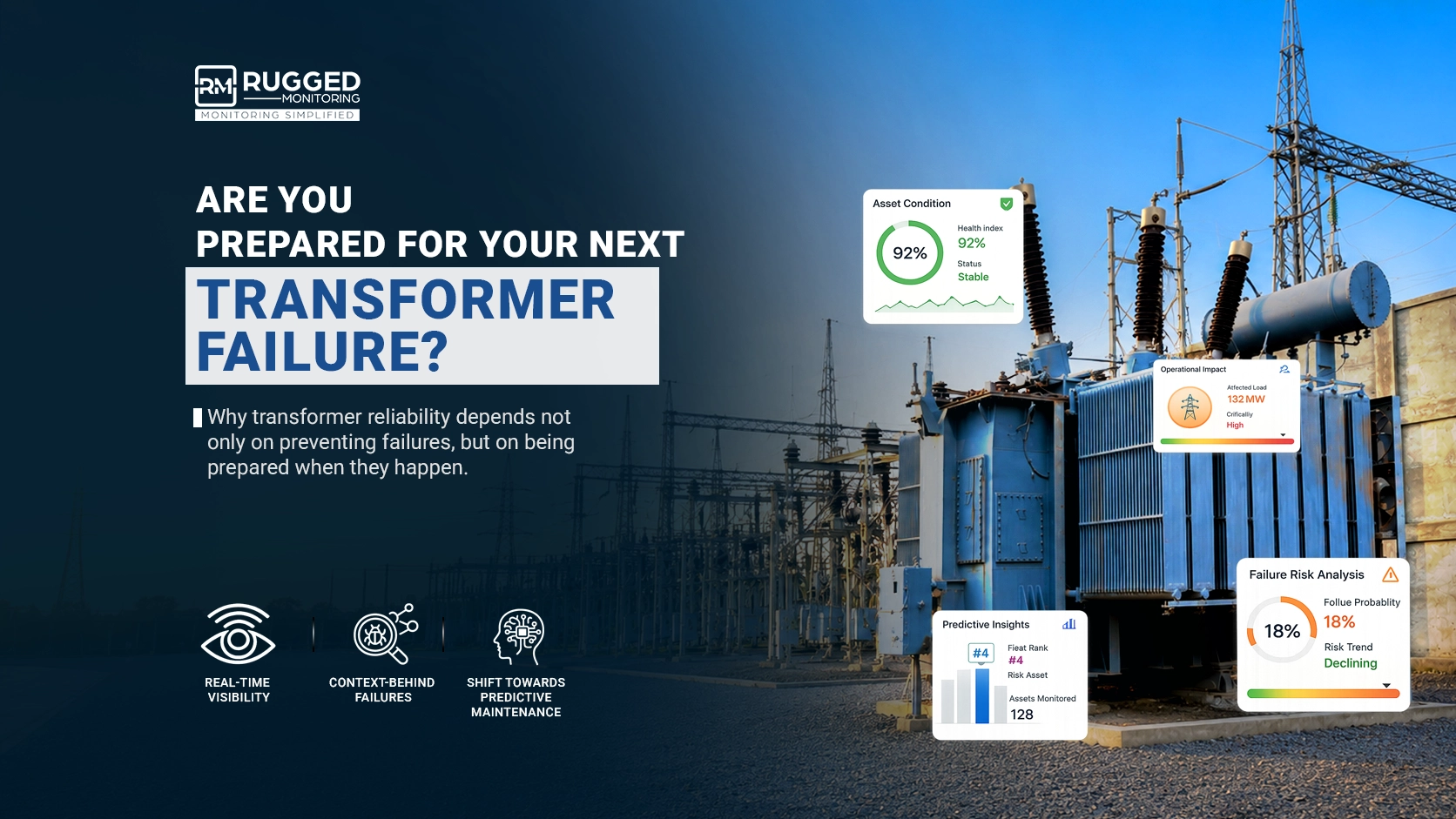
A transformer may appear healthy today while still creating significant risk tomorrow. Hence, the most effective solution for maintenance teams to prepare for unexpected failures is continuous real-time visibility. Not only into the current asset they are monitoring, but also at fleet-wide and asset-wide levels, to understand nuances in health and performance that would otherwise be missed.
Organizations need visibility into both:
- Real-time asset conditions
- Operational consequences of those asset conditions
The combination of these two perspectives creates a much more accurate view of the transformer risk.
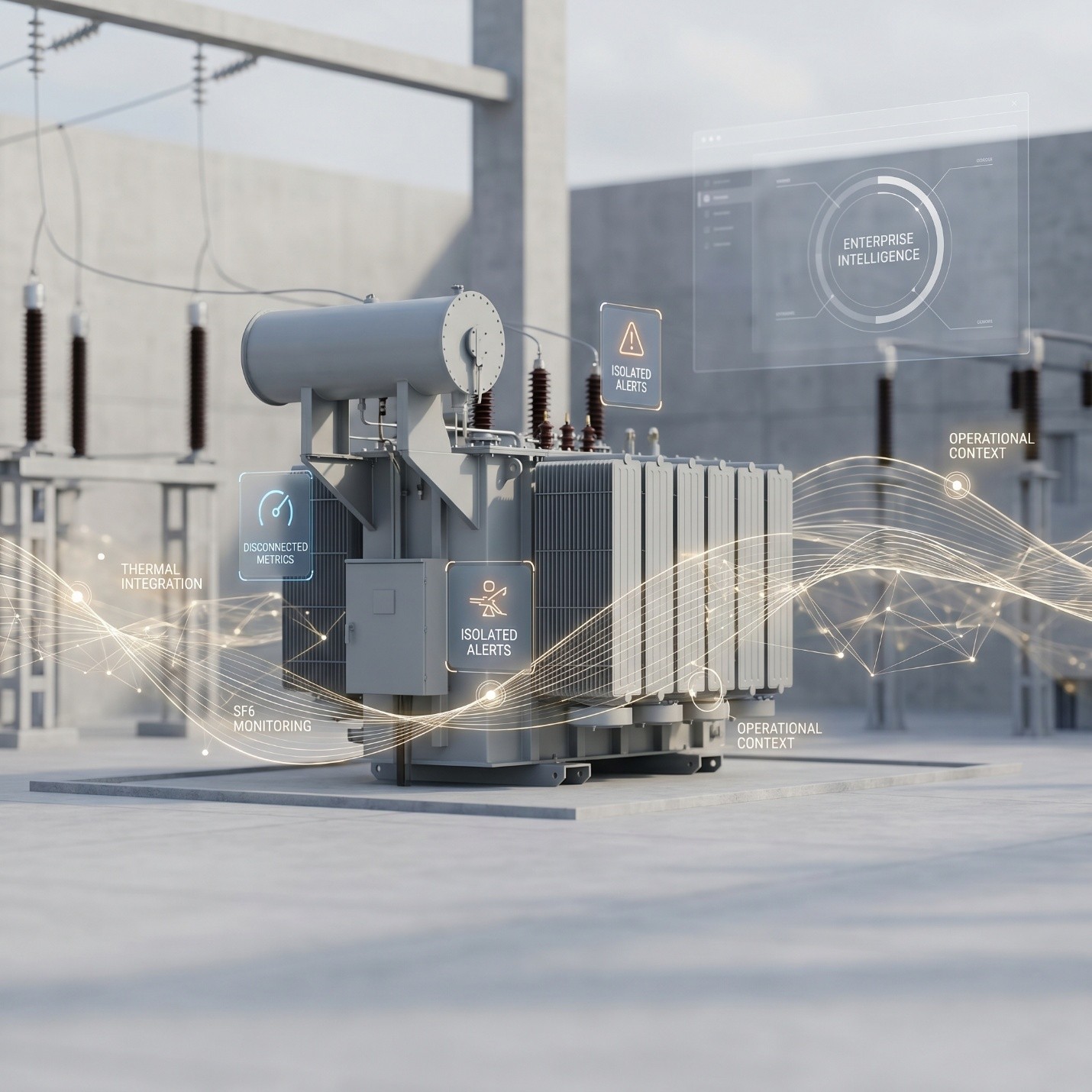
In addition to visibility, teams also require data-driven analytics. This will help them understand and move beyond individual failure events and identify broader transformer reliability patterns.
With data-driven transformer analytics, teams can answer complex questions such as:
- Is reliability improving?
- Where is risk accumulating?
- Whether maintenance investments are effective
- Are the current operational decisions affecting asset longevity?
Platforms such as Asset Performance Management (APM) provide both real-time visibility and data-driven analytics, resulting in complete system readiness.
How to prepare for transformer failures with APM?
While most maintenance strategies approach failures from a preventive perspective, APM offers predictability. By providing a centralized view of asset performance, risk, and criticality, it helps organizations move beyond just a transformer’s condition to actionable insights before failure can occur. Hence, maximizing not only transformer reliability but also overall O&M efficiency.
Here is how utility teams can use APM to predict and prevent failures before they happen:
Identifying High-Risk Assets
Not all transformers show the same level of operational risk. For example, a failure in a critical substation transformer may have significantly greater consequences than a failure in a less critical location.
With APM, teams continuously evaluate asset conditions, performance history, maintenance records, and operational hierarchy to identify which transformer presents the greater risk in the fleet or even the grid. Thus, allowing asset teams to allocate resources towards those that will have the greatest impact on reliability and efficiency.
Understanding the Context Behind Failures
One of the biggest challenges for industries is real-time visibility into downstream impacts. Teams often have systems in place that provide visibility only into transformer conditions and their effects, not into operational consequences.
APM integrates asset condition data with operational context to help organizations understand:
- Which assets are critical to the business
- Potential operational impact of a failure
- Available redundancy within the network
- Recovery and replacement requirements
Thus, shifting transformer reliability planning from reactive to predictive preparedness.
Risk-Based Maintenance
Traditional maintenance programs treat all transformers similarly, relying on fixed intervals and historical practices. However, not all assets age or operate under the same conditions.
APM empowers utilities with risk-based maintenance that continuously evaluates asset health and performance trends. This helps maintenance teams identify which transformers require immediate attention and which assets can safely remain in service, ensuring resources are allocated more effectively.
Shift to Predictive Maintenance
Asset performance management systems combine condition monitoring data, maintenance history, and performance trends to identify degradation patterns that may otherwise be obscured by fragmented systems.
This not only allows organizations to strengthen their predictive maintenance strategies but also to intervene before issues escalate into catastrophic events that affect transformer reliability.
Long-Term Transformer Reliability Planning
Preparing for and investing in APM systems should be not only a short-term response but also a long-term asset strategy.
APM not only provides a centralized view of data, transformer analytics, and decisions, but also helps organizations:
- Forecast future reliability risks
- Prioritize refurbishment or replacement programs
- Optimize capital investment decisions
- Develop more resilient asset management plans
Thus, ensuring that preparedness becomes an ongoing reliability capability rather than a one-time contingency plan.
Building a Risk-Informed Approach to Transformer Reliability
The most resilient organizations understand that transformer failures cannot always be avoided. Aging infrastructure, changing operating conditions, and external factors will always introduce risk.
The objective, therefore, is not simply to prevent failures whenever possible, but to ensure the organization is prepared when they occur.
By combining asset condition, operational context, performance trends, and risk analysis into a single framework, APM helps utilities and industrial operators build a more predictive approach to transformer reliability.
One that focuses not only on reducing the probability of failure but also on reducing the impact of failure.
Want to learn more about how asset performance management can help identify developing transformer risks and support risk-informed maintenance decisions?
Schedule a call with our Industry Experts