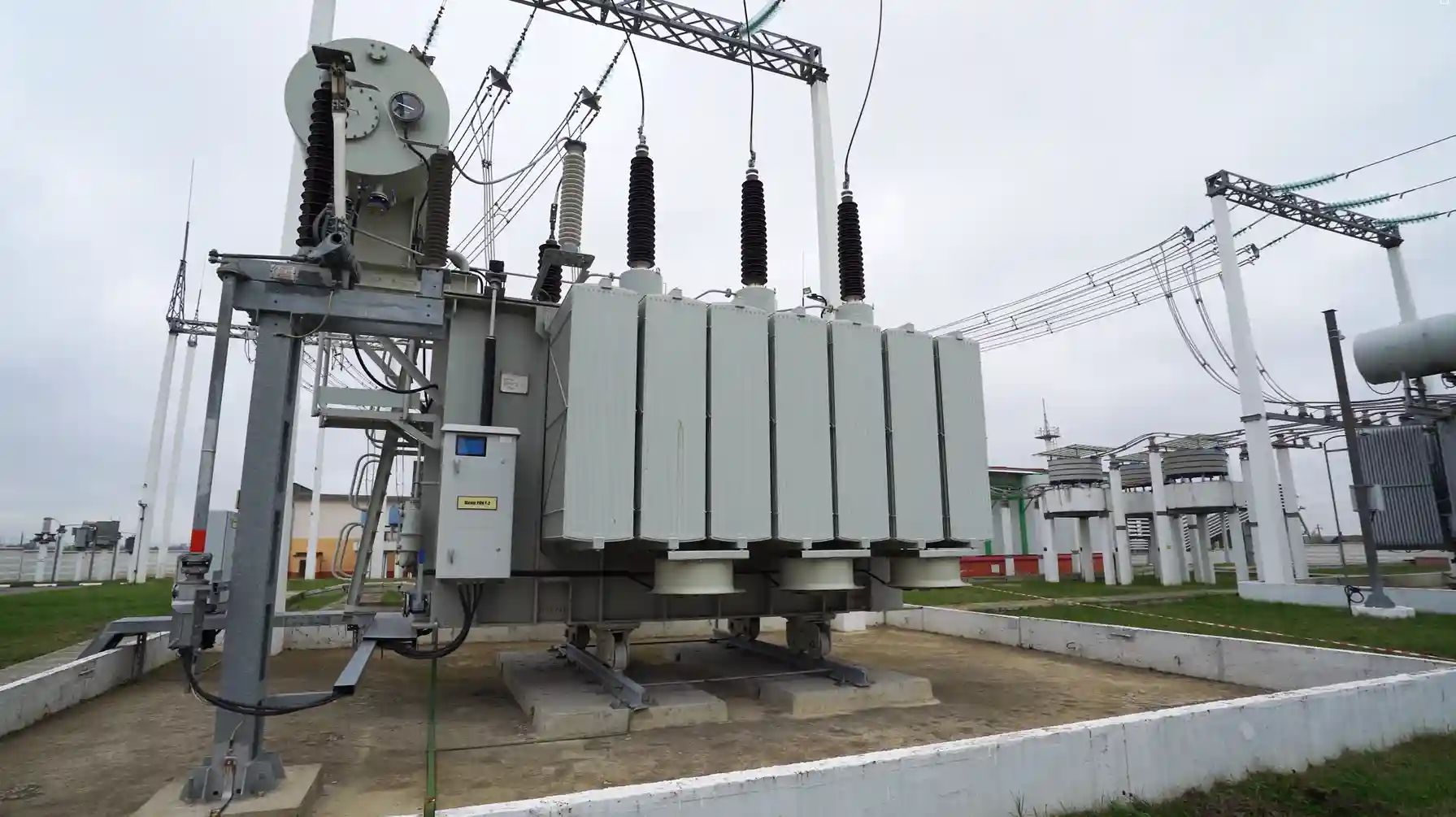
Dissolved Gas Analysis in transformers is one of the crucial techniques for detecting developing faults before they cause major failures. Every transformer undergoes thermal, electrical, and mechanical stress during its operation. Each of these events causes the formation of gases within the transformer’s insulating oil, affecting the stability and safety of the entire power grid.
By analyzing these gases, engineers can understand what’s happening inside the transformer without opening it up. But how should this analysis be performed? Perhaps through offline laboratory testing or online dissolved gas analysis of the transformer oil.
Let’s explore both methods and understand which method is becoming the benchmark for advanced transformer monitoring.
What is Dissolved Gas Analysis in transformers?
DGA is a diagnostic technique used to assess transformer health by analyzing the gases dissolved in its insulating oil. By studying the type and concentration of these gases, valuable insights can be gained about the overall condition of the transformer. The IEC standard for DGA provides a reliable framework for interpreting gas levels, helping operators pinpoint issues such as partial discharges, overheating, or even electrical arcing inside the unit.
During testing, DGA typically examines key gases, including Hydrogen (H2), Carbon Monoxide (CO), Ethane (C2H6), Methane (CH4), Carbon Dioxide (CO2), Ethylene (C2H4), Oxygen (O2), and Acetylene (C2H2). Collectively, these gases are known as diagnostic gases. Each of these gases indicates specific fault conditions. For instance,
- Hydrogen indicates the partial discharge
- Methane gas generally indicates partial discharge activity and overheating of oil
- Ethylene is linked to hotspot or localized overheating
- Acetylene indicates high-energy arcing
- Carbon Monoxide represents the aging or thermal decomposition of a transformer’s cellulose insulation
- Carbon Dioxide indicates overheating of the paper
- Oxygen is present due to residual air or air ingress into the transformer
Protection devices such as Buchholz relays have been used to detect catastrophic faults in oil-filled transformers. However, these devices are not efficient in identifying substantial failures, as they are unable to capture the minor gas patterns that indicate developing issues. This highlights the importance of analyzing the gases dissolved in transformer oil.
Dissolved Gas Analysis Monitoring Methods in Transformers
The two main categories of DGA monitoring techniques are:
- Offline (lab-based)
- Online (continuous monitoring)
Each has distinct advantages, limitations, and appropriate use cases.
What is Offline Dissolved Gas Analysis in Transformers?
Offline DGA, also known as laboratory dissolved gas analysis of transformer oil. It is a traditional and accurate method that has been used for decades. In this process, a technician collects a sample of transformer oil, seals it in a syringe or container, and sends it to a laboratory for analysis. Inside the lab, gases are extracted from the oil using techniques such as headspace gas extraction and analyzed through gas chromatography (GC).
For gas chromatography, IEC 60599:2015 and IEEE C57.104-2019 provide interpretation guidelines for dissolved gas levels in offline samples. GC delivers high precision and can measure even trace amounts of gases at parts per million (ppm) levels.
Pros of Offline DGA
- Detects all critical fault gases with precision.
- Suitable for forensic and deep-dive analysis of complex faults.
Cons:
- Requires transformer shutdown and manual sampling.
- Time-consuming and logistically intensive.
- Typically performed once or twice a year, leaving long gaps between data points.
- Sensitive to environmental variations; GC systems need daily calibration.
Overall, Offline DGA is a reliable method for scheduled maintenance; however, it lacks the speed and consistency required for continuous fault prevention.
What is Online Dissolved Gas Analysis in Transformers?
With advances in digitalization, online DGA monitors have been gaining popularity. These devices provide real-time fault detection and predictive insights without interrupting operation.
Modern online DGA analyzers continuously sample oil, detect dissolved gases and transmit data remotely. The systems are based on compact and automated versions of laboratory GC systems. Online GC provides accurate measurement of gas concentrations and trends, allowing for comparison with historical data and maintaining superior accuracy through its frequent self-calibration. This ensures consistent performance and allows predictive maintenance.
However, other method, such as Photo-Acoustic Spectroscopy (PAS), detect gases through the photo-acoustic effect. By analyzing the sound at different wavelengths, a photoacoustic spectrum is generated. This allows the identification of specific fault gases. PAS does not require a carrier gas, making the system cost-effective in the long run.
Pros of Online DGA:
- Continuous, real-time monitoring of DGA in transformers without power shutdown.
- Immune to temperature, vibration, and pressure changes.
- No frequent servicing required.
- Enables early fault detection and predictive maintenance.
Cons:
- Higher initial cost than occasional lab tests.
With online DGA analysis, utilities can track daily, weekly, and seasonal gas trends. They can identify trends, patterns, and prevent failures long before they occur.
Choosing between Online and Offline Monitoring Methods
The decision depends on several factors, such as:
| Criteria | Offline DGA in transformers | Online DGA in transformers |
| Operation | Requires shutdown | Continuous, real-time monitoring |
| Accuracy | High in lab conditions | High, field-stable |
| Frequency | Periodic (annual/bi-annual) | Continuous (daily or weekly) |
| Maintenance | Needs manual sampling | Automated, maintenance-free |
In practice, many utilities combine both approaches. Online DGA monitoring provides real-time condition monitoring, while offline DGA is used for periodic testing.
Is Online DGA Monitoring the Smarter Choice Today?
In power networks, shutting down transformer operations and waiting for lab results is often an inefficient approach. That’s why many operators prefer online DGA monitoring, which offers several distinct advantages:
Continuous Monitoring: Detects faults as soon as they develop, not months later. This enables operators to receive early warnings and take any necessary action in a timely manner.
Cost Saving: DGA monitoring enables operators to adopt condition-based maintenance. Prevents catastrophic failure and reduces maintenance costs for utilities that require replacement.
Early Fault Detection: By identifying potential issues such as overheating, arcing, and insulation degradation, DGA monitoring helps to extend the transformer’s lifespan.
Remote Access: Online DGA monitoring allows operators to view results remotely, eliminating the need for physical presence at the site.
Improved Reliability and Safety: Enables proactive maintenance, reducing unexpected shutdowns and mitigating risk to ensure safer transformer operation.
Compliance with Industry standards: For DGA transformer monitoring, standards from organizations like IEEE and IEC recommend regular testing. Following these standards helps transformers operate safely and reliably.
Switching Towards Predictive Reliability
A single gas reading may not raise alarms, but a steady rise in concentration can indicate an emerging fault. This highlights the need for predictive monitoring rather than reactive checks.
However, Traditional lab-based DGA relies on periodic oil sampling, leading to delays, contamination risks, and monitoring gaps that limit its effectiveness in failure prevention. To overcome these challenges, Rugged Monitoring’s RM EYE enables utilities to transition from reactive diagnostics to real-time, predictive maintenance. By applying AI-driven analytics, advanced digitization, and automated diagnostics, it ensures continuous transformer health monitoring, helping operators detect failures early, optimize maintenance, and reduce costs.
Ready to add continuous DGA visibility to your transformer monitoring program? Contact our team to find the right approach for your critical assets.
FAQs
What is dissolved gas analysis (DGA) in transformers?
Dissolved Gas Analysis is a diagnostic method used to assess the condition of oil-filled transformers by measuring gases dissolved in the insulating oil. Thermal and electrical faults can generate characteristic gases through the decomposition of insulating oil and cellulose. By evaluating gas concentrations, patterns, and trends using guidance such as IEC 60599 and IEEE C57.104, operators can identify indications associated with conditions such as overheating, partial discharge, and arcing.
What is the difference between online and offline DGA?
Offline DGA involves periodically collecting an oil sample and analyzing it in a laboratory, commonly using gas chromatography. It provides detailed diagnostic information at a specific point in time. Online DGA uses permanently installed monitoring equipment to measure selected dissolved gases automatically at regular intervals or continuously, depending on the system. This provides greater visibility into gas trends and changes between laboratory samples.
Does offline DGA still matter if online monitoring is used?
Yes. Online and offline DGA can complement each other. Online monitoring provides frequent condition data and helps identify developing trends, while laboratory DGA remains valuable for detailed analysis, further investigation, and confirmation of abnormal results when required. Using both approaches can provide continuous visibility while retaining access to detailed laboratory analysis.
Which fault gases does DGA monitor, and what do they indicate?
Common gases evaluated in DGA include hydrogen (H₂), methane (CH₄), ethane (C₂H₆), ethylene (C₂H₄), acetylene (C₂H₂), carbon monoxide (CO), and carbon dioxide (CO₂). Different gases and gas patterns can be associated with conditions such as partial discharge, thermal faults, arcing, and degradation of cellulosic insulation. DGA interpretation should consider gas concentrations, rates of change, relationships between gases, operating history, and applicable diagnostic methods rather than assigning a fault based on a single gas alone.
How often should critical transformers be tested with DGA?
There is no single DGA testing interval suitable for every transformer. Sampling frequency should reflect factors such as asset condition, criticality, operating history, previous DGA results, and the applicable maintenance strategy or guidance. Periodic laboratory testing provides condition snapshots, while online DGA can provide more frequent visibility into gas generation and changing trends between scheduled samples.
Can online DGA be integrated with broader transformer condition monitoring?
Yes. DGA provides one part of the transformer condition picture. When gas trends are considered alongside relevant parameters such as temperature, loading, bushing condition, partial discharge, and other available condition data, operators can develop a more complete view of transformer health. Platforms such as Rugged Monitoring’s RM EYE can bring condition information from multiple monitoring technologies into a connected environment for trend analysis and condition assessment.