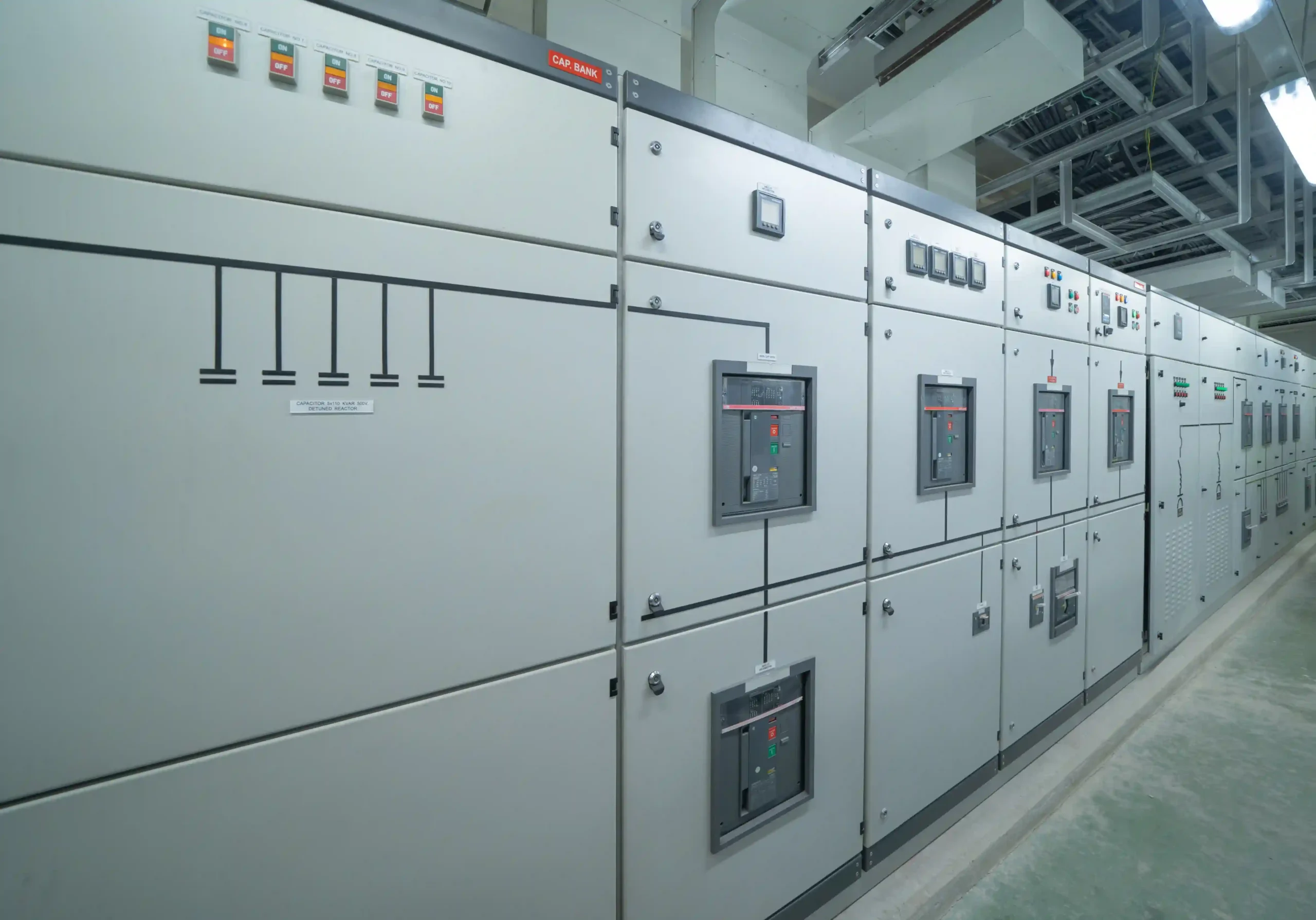
Switchgear plays a vital role in electrical power systems, ensuring safe operation, reliable power distribution, and protection of critical assets. However, as electrical demand rises and infrastructure ages, switchgear failures have become a growing concern across all power-dependent facilities. In the most demanding environments, even a short power interruption can lead to severe safety risks, cause costly downtime, and prolong recovery efforts. These impacts are not theoretical. According to IEEE surveys, a single switchgear failure results in an average of 261 hours of downtime, highlighting the scale of operational disruption.
Therefore, understanding the most common switchgear failure modes and their root causes is essential. Equally important is recognizing the early warning signs that help asset managers and electrical engineers maintain system reliability before a fault escalates.
This blog outlines the top switchgear failure modes, their early warning signs, and how modern condition monitoring keeps operations safe and reliable.
What Causes Switchgear Failures?
Switchgear failures are typically caused by insulation breakdown, overheating, mechanical wear, environmental factors, poor maintenance, electrical stress, and human or installation errors. As switchgear operates continuously under thermal, mechanical, and dielectric stresses. With time, the impact of these external and internal factors degrades the components, increasing the possibility of failure.
Below are the most common root causes of switchgear failure:
Failure Mode |
Root Cause |
Impact |
| Insulation Degradation | Aging insulation, moisture ingress, contamination, thermal stress, and harsh environmental exposure | Insulation breakdown leads to flashover, phase-to-phase or phase-to-ground faults, arcing, and short circuits. These result in equipment damage, fire, and operational downtime. |
| Partial Discharge (PD) | High electric field stress exceeds dielectric strength. This is observed at terminations, bus joints, insulation voids, and contaminated surfaces. | Repeated PD causes gradual insulation erosion and micro-cracks. This eventually causes dielectric breakdown, arc-flash risk, and unexpected outages. |
| Contact Wear or Mechanical Failures |
Frequent switching operations, arcing, poor lubrication, misalignment, or mechanical fatigue. |
Increased contact resistance leads to overheating and unreliable switching performance, potentially resulting in ineffective fault current interruption. This elevates the risk of fire or arc-flash events. |
| Overheating and Thermal Hotspots | Overloading, loose connections, corrosion on contact surfaces, excess current flow through degraded conductors, and thermal cycling. | Damages insulation, busbars, and contacts, increasing the risk of contact welding and arcing. This accelerates component aging and reduces asset lifespan. |
| Environmental Stress | Humidity, dust accumulation, corrosive gases, and chemical exposure. | Contamination and corrosion increase PD risk and may cause unpredictable faults and reduced switchgear reliability. This is particularly common in AIS installations exposed to open environments. |
| Manufacturing and Installation Defects | Poor material quality, incorrect component sizing, improper assembly, incorrect installation, and inadequate sealing | Defects can lead to premature failures and unreliable operation, creating safety hazards soon after commissioning. This results in unexpected outages. |
| Breaker Failures | Aging or faulty breakers, degraded tripping/relay systems, miscalibrated protective devices, and issues within the control circuit | These problems can cause failure to clear fault currents, which may cause delayed tripping and result in severe equipment damage during fault conditions. |
As infrastructure ages and power demand grows, these risks accelerate, often remaining hidden until it’s too late.
Early Warning Signs of Switchgear Failures
Switchgear rarely fails without warning. Several detectable, progressive symptoms appear long before catastrophic damage:
- Temperature rise or hotspots on joints, busbars, and contacts
- Unusual noise like hissing, buzzing, or crackling, an indicator of PD
- Circuit breaker misbehaviour, slow operation, or frequent nuisance trips
- Smell of ozone or burning insulation due to PD
- Visible corrosion, dust, and moisture accumulation
- Unexplained relay alarms or tripping events
These failure modes can escalate quickly if left undetected, resulting in major operational disruptions. This is where switchgear condition monitoring becomes essential, helping shift maintenance strategies from reactive to proactive.
How Condition Monitoring Prevents Switchgear Failures?
Overheating, partial discharge, insulation degradation, and mechanical wear generate early-stage indicators that can be detected well before a fault occurs. Continuous condition monitoring enables early detection, helping operators avoid unplanned outages and major safety risks. Monitoring strategies for AIS, GIS, and MV panels differ slightly based on insulation type, design, and exposure.
Here’s how advanced switchgear condition monitoring strengthens switchgear performance and reliability:
- Continuous Health Tracking
Real-time monitoring of temperature, partial discharge, and breaker health enables predictive maintenance and reduces field exposure to energized panels. - Prevents Unexpected Downtime
Alerts notify operators of issues as soon as they arise, allowing for fast, immediate repairs rather than sudden equipment failures. - Improves Safety and Reduces Arc-Flash Risk
Minimizes manual inspection of live equipment, lowering the chance of human error and high-energy electrical hazards. - Extends Equipment Lifespan
Maintaining components within safe operating limits slows insulation aging and protects critical assets throughout their lifecycle. - Optimizes O&M Costs
Prioritizes maintenance efforts based on actual asset health, reducing emergency repairs, and maximizing ROI.
Strategic Maintenance with Rugged Monitoring
Rugged Monitoring brings a data-driven approach to switchgear reliability, enabling operators to stay ahead of failures. By integrating advanced sensing technologies with intelligent analytics, teams gain continuous insight into insulation health, contact performance, and thermal behaviour. Here’s how Rugged Monitoring protects switchgear assets:
- Fiber Optic Temperature Monitoring
-
- Detects real-time hotspots in live and enclosed compartments
- Immune to electromagnetic interference, ideal for high-voltage environments
- Built to perform in extreme conditions where traditional sensors fail
- Online Partial Discharge (PD) Monitoring
-
- Detects insulation breakdown at its earliest stage
- Reduces arc-flash risk and prevents catastrophic switchgear failure
- Supports continuous monitoring without opening energized panels
- Unified and Real-time Visibility
Enterprise APM Suite, RM EYE centralizes data from multiple switchgear systems across sites. It:
-
- Delivers real-time visibility of asset condition
- Supports multiple protocols for seamless SCADA/EMS/DCS integration
- Automates alarms, risk scoring, and maintenance insights
- Accelerates digitalization of the entire electrical ecosystem
Real-world Success
In a recent case study, a major refinery in India deployed the full suite of RM EYE from Rugged Monitoring. The deployment covered multiple critical assets, including their high-voltage (HV) switchgear. Rugged Monitoring installed fibre-optic temperature sensors on the switchgear to deliver real-time thermal insight.
The solution enabled both retrofit deployment and 24/7 continuous monitoring. As a result, the client significantly reduced emergency repairs, decreased unplanned downtime by 35–40%, extended equipment life, and optimized maintenance budgets.
Rugged Monitoring delivers efficient and field-proven condition-monitoring solutions for HV switchgear and other critical electrical infrastructure.
Build a Safer, More Reliable Electrical Grid
Switchgear failures often develop quietly as components age, insulation weakens, or connections loosen. When operating conditions push equipment beyond its limits, these small changes escalate quickly. Detecting them early prevents minor deterioration from turning into costly disruptions.
Rugged Monitoring equips operators with a unified view of switchgear health across utilities, refineries, manufacturing plants, data centres, and other high-demand sectors. Our switchgear monitoring solution strengthens grid stability, reduces unplanned downtime, detects anomalies early, and significantly reduces operational uncertainty.
With Rugged Monitoring, you gain:
- Real-time risk visibility
- Safer operations with fewer energized inspections
- Faster decision-making with actionable insights
- Extended asset life and reduced repair costs
- Increases uptime driven by proactive maintenance
Modernize your switchgear maintenance strategy with Rugged Monitoring!
Contact us today !