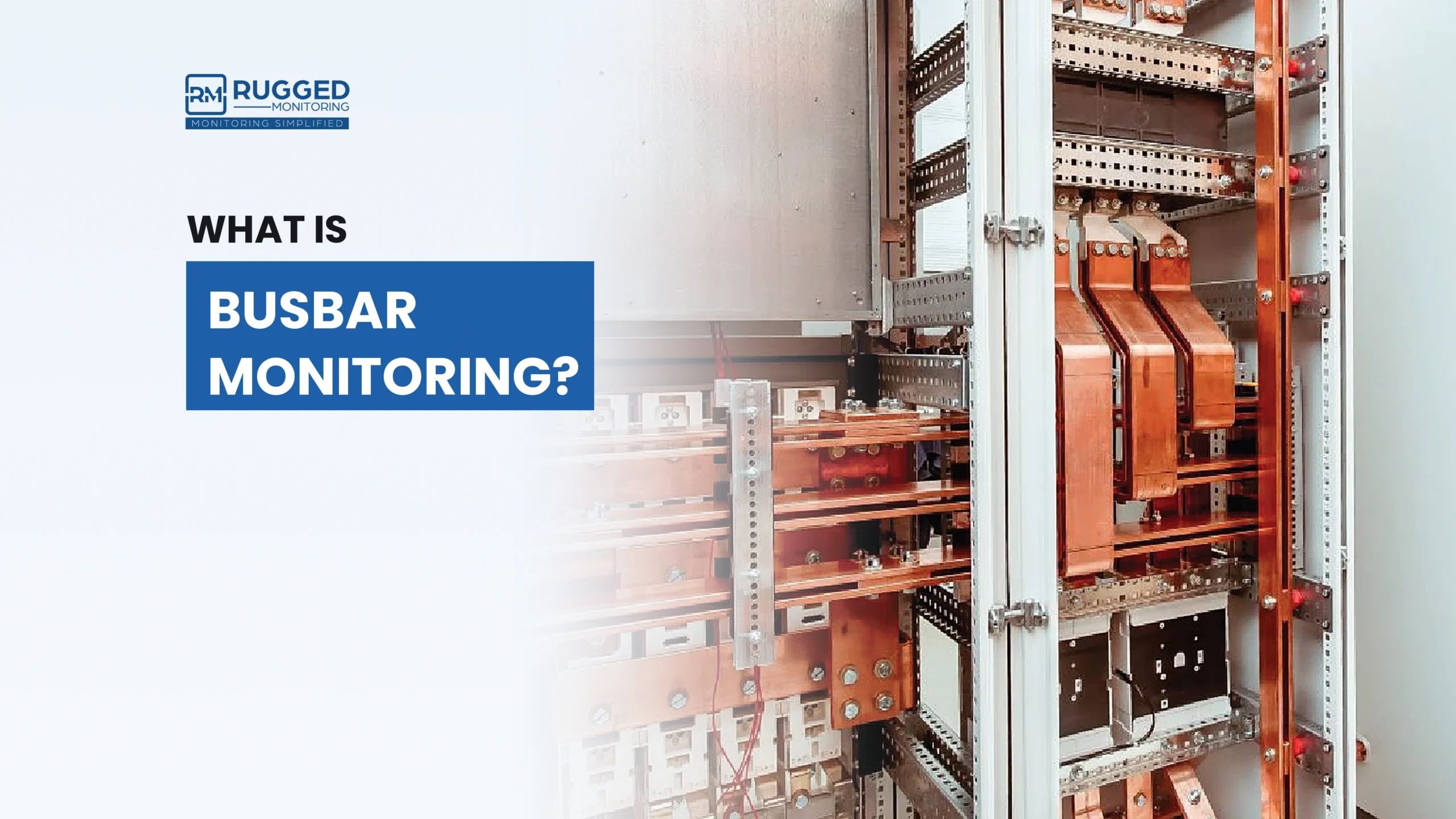
Busbars play a central role in distributing power across switchgear and electrical systems. Over time, electrical, thermal, and environmental stresses can affect joints, connections, and insulation, sometimes without obvious signs during normal operation.
Busbar monitoring provides visibility into these changes and helps identify developing issues before they become more serious.
This article covers what busbar monitoring is, why it is useful, which busbar parameters you can monitor, and how online busbar monitoring works.
What is a busbar?
A busbar is a metal conductor that collects and distributes electrical current within switchgear, medium-voltage panels, substations, bus duct systems, and other power distribution equipment.
In a switchgear lineup, the main busbar typically connects the incoming supply to multiple feeder sections, which distribute power to outgoing circuits.
Busbar systems include more than the conductor itself. Joints, bolted connections, supports, and insulation all contribute to reliable operation. Because multiple circuits may depend on the same busbar system, deterioration at one of these points can have consequences beyond a single feeder.
What causes busbar problems?
Busbars are designed for long-term operation, but electrical, thermal, mechanical, and environmental stress can affect their condition.
- Joint and connection deterioration: Thermal cycling, vibration, or installation issues can increase contact resistance, resulting in localized heating and hotspots.
- Overloading and thermal stress: High or uneven current can increase temperature and place additional thermal stress on connections and insulation.
- Insulation deterioration: Aging, defects, voids, or damage can reduce dielectric integrity and contribute to partial discharge activity.
- Moisture and contamination: Dust and moisture can affect insulation surfaces and connections, contributing to tracking, corrosion, and reduced insulation performance.
If left undetected, these conditions can worsen over time and increase the risk of equipment damage, electrical faults, and unplanned feeder interruptions. In severe cases, insulation or connection failures can contribute to arcing faults and associated arc-flash hazards.
What is busbar monitoring?
Busbar monitoring is used to track the operation of busbars, joints, connections, and associated insulation and identify changes that may indicate developing problems.
It provides greater visibility into busbar performance while equipment is operating and helps maintenance teams identify issues that may otherwise develop between scheduled inspections.
The main benefits include:
- Earlier identification of developing issues: Helps detect abnormal changes before they progress into more serious problems.
- Reduced risk of unplanned outages: Provides an opportunity to investigate developing issues before they contribute to equipment failure or interruption.
- Better maintenance planning: Helps teams prioritize inspection and maintenance based on observed changes and trends.
- Improved operational visibility: Provides greater insight into how the busbar system is operating.
- Trend-based insights: Helps identify gradual changes that may not be apparent from a single inspection or measurement.
Busbar monitoring uses different measurements and monitoring methods depending on the equipment, application, and operating environment.
What does busbar monitoring measure?
A busbar monitoring system tracks different parameters based on monitoring requirements.
Common parameters include:
- Temperature: Identifies abnormal heating and hotspots at joints and connections.
- Electrical current: Tracks loading, overloads, and phase imbalance.
- Partial discharge: Indicates electrical activity associated with insulation defects or deterioration.
- Voltage: Provides information about the electrical operating conditions of the busbar system.
- Humidity and environmental conditions: Tracks conditions that can affect insulation and connection performance.
- Vibration: Identifies abnormal mechanical movement or changes in the busbar assembly.
Not every busbar installation requires all these measurements. The parameters selected depend on the equipment, application, operating environment, and monitoring requirements.
Once these measurements are collected, they can be processed and brought together through an online busbar monitoring system.
How does online busbar monitoring work?
An online busbar monitoring system processes and brings these measurements together for continuous monitoring.
The basic architecture is:
Sensors → Edge devices → Monitoring software
Sensors and measurement devices capture selected parameters, which may include temperature, partial discharge, current, voltage, vibration, or environmental measurements.
Edge devices collect and process this data and communicate it to the monitoring system. Depending on the setup, they may also apply thresholds or generate alarms when measurements move outside defined limits.
Monitoring software brings measurements into a common interface, where teams can view data, follow trends, receive alarms, and identify changes that may require attention.
Rugged Monitoring follows this architecture through its IIoT Sensors → Edge Devices → RM EYE ecosystem. Dedicated sensing solutions monitor temperature and partial discharge, while RM EYEintegrates other relevant busbar measurements from compatible third-party systems and data sources.
At the enterprise level, RM EYE brings this information together through trends, alarms, health and risk views, and multi-asset visibility across sites, helping teams monitor and prioritize busbar-related issues across their electrical assets.
Improve visibility into your busbar system
Talk to our team to learn how continuous busbar monitoring can be applied to your electrical assets.
Frequently Asked Questions About Busbar Monitoring
What is busbar monitoring in simple terms?
Busbar monitoring tracks selected electrical, thermal, insulation, mechanical, or environmental parameters to provide visibility into how a busbar system is operating and identify abnormal changes.
Why is busbar temperature monitored?
Increasing resistance at a joint or connection can create localized heating. Temperature monitoring helps identify developing hotspots and abnormal thermal conditions.
Why use fiber optic sensors for busbar temperature monitoring?
Fiber optic sensors provide a dielectric sensing path and immunity to electromagnetic interference, making them suitable for temperature measurement in high-voltage electrical environments.
Why monitor partial discharge on busbars?
Partial discharge can indicate developing insulation problems associated with the busbar system that may not produce a noticeable temperature rise, complementing thermal monitoring.
Does online monitoring replace periodic busbar inspection?
No. Online monitoring provides continuous trends, while periodic inspections provide physical and diagnostic information at scheduled intervals.