A power network is more than an infrastructure for transmitting electricity from generation sources to end users. Over the years, it has evolved into a highly interconnected ecosystem comprising various electrical assets. Transformers, switchgear, substation, circuit breakers, and power cables must operate reliably under increasingly dynamic conditions.
Rising electricity demand, ageing infrastructure, and evolving grid regulations are increasing the operational complexity. To meet these challenges, utilities and operators are adopting digital technology, automation, and real-time electrical asset monitoring to improve reliability and optimize maintenance.
For an industry, a resilient power network is important to run smooth operations. Industries like manufacturing, oil and gas, mining, data centers and large-scale production plants depend on stable electricity.
A single unexpected equipment failure can trigger unplanned outages, production losses, and significant financial losses. As industrial operations have increasingly become automated, the reliability of every electrical asset within the power network becomes an operational concern.
A well-managed power network enables organizations to:
- Minimize unplanned outages and reduce the financial impact of production interruptions.
- Improve workforce safety by ensuring the reliable operation of high-voltage equipment and maintaining system integrity.
- Extend the service life of critical electrical assets through condition-based maintenance and informed operational decisions.
- Optimize maintenance expenditure by prioritizing interventions based on actual asset conditions rather than fixed maintenance intervals.
- Support sustainability objectives by enabling the reliable integration of renewable energy sources, distributed generation, and microgrids without compromising grid stability.
As power networks have become more interconnected and operational expectations continue to skyrocket, maintaining asset reliability is no longer the responsibility of the maintenance team. It has become a strategic business priority. This is where electrical asset monitoring plays a vital role.
What is Electrical Asset Monitoring?
Electrical asset monitoring is a constant process of collecting and analyzing its health and performance. This helps assess emergency faults, detect early signs of degradation, and supports decision-making. This helps in assessing emergency faults, detecting early signs of degradation, and supporting decision making.
Traditional Maintenance vs Electrical Asset Monitoring
| Comparison | Traditional Maintenance | Electrical Asset Monitoring |
| Maintenance approach | Relies on periodic inspections and fixed maintenance schedules. | Asset monitoring using real-time data. |
| Fault detection | Faults are often identified after equipment performance has deteriorated. | Detects early signs of degradation before failures occur. |
| Asset visibility | Provides limited visibility between inspection intervals. | Delivers continuous visibility into asset condition and performance. |
| Maintenance planning | Maintenance activities are scheduled based on time or equipment usage. | Maintenance is prioritised based on the actual health and condition of each asset. |
| Operational impact | Higher risk of unexpected failures, emergency repairs, and unplanned outages. | Reduces operational risks through proactive interventions and planned maintenance. |
| Decision-making | Decisions are primarily reactive and based on periodic inspections. | Decisions are data-driven, condition-based, and support predictive maintenance. |
As power networks become complex, traditional maintenance techniques are no longer sufficient. While periodic inspection remains important, utilities and industries rely on electrical asset monitoring for continuous visibility that led to better decisions.
To provide this continuous visibility into asset health, electrical asset monitoring integrates three key components: intelligent sensors, condition monitoring technologies, and Asset Performance Management (APM) software. Together, these technologies provide real-time visibility into asset performance, enabling predictive maintenance, reducing unplanned outages, and improving overall power system reliability.
How Does Electrical Asset Monitoring Work?
- Data Collection
Intelligent sensors installed on transformers, switchgear, circuit breakers and other critical assets capture parameters such as total harmonic distortion, winding temperatures, partial discharge, oil condition and load.
- Condition Monitoring
With the help of advanced analytics, machine learning, and AI analysing data becomes easier. When deviations or abnormal trends are detected, the system generates alerts that enable maintenance teams to investigate potential issues before they develop into failures. - Asset Performance Management
Asset Performance Management (APM) platforms consolidate data from multiple assets, prioritize risks, and provide actionable insights. This enables utilities to optimize maintenance schedules, improve asset reliability, and support predictive maintenance strategies.
Challenges of Operating Without Electrical Asset Monitoring
Operating electrical assets without monitoring limits visibility into their actual condition. This increases the risk of unexpected failures and inefficient maintenance practices. Without timely insights, industries may experience:
- Unexpected power transformer failures: Developing issues like insulation degradation, partial discharge or oil deterioration may remain undetected leading to costly repairs or replacements.
- Increased emergency maintenance: Without condition monitoring, maintenance teams are often forced to respond to failures instead of planning interventions, resulting in higher maintenance costs and operational disruptions.
- Reduced asset service life: Minor equipment issues that are not identified early can accelerate asset deterioration, reducing the operational life of transformers, switchgear, circuit breakers, and other critical electrical assets.
- Higher safety risks: Undetected equipment faults can increase the likelihood of electrical hazards, equipment damage, and unsafe working conditions for maintenance personnel.
- Lower grid reliability and power system reliability: Unexpected asset failures can interrupt power delivery, increase downtime, and affect the overall stability and reliability of the power network.
- Inefficient electrical asset management: Limited visibility into asset condition makes it difficult to prioritise maintenance activities, optimise maintenance budgets, and make informed asset management decisions.
Critical Electrical Assets That Require Continuous Monitoring the Most
The reliability of a power network depends on the health and performance of its critical electrical assets. Assets such as power transformers, circuit breakers, switchgear, power cables, and rotating machines perform essential functions in power generation, transmission, distribution, and industrial operations. Any deterioration or unexpected failure in these assets can disrupt power delivery, compromise safety, and lead to costly operational downtime.
Continuous electrical asset monitoring provides early visibility into developing issues, enabling timely maintenance interventions that improve reliability, extend asset life, and reduce operational risks.
-
Power Transformers
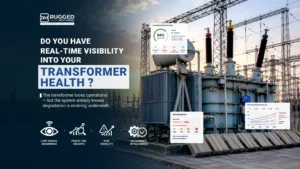
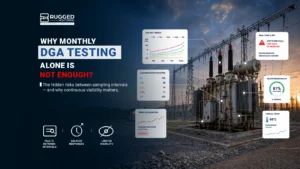
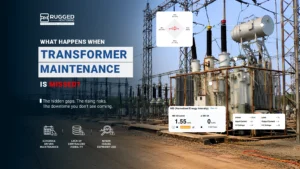
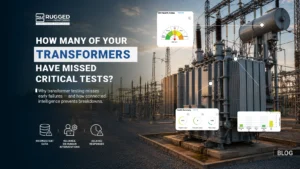
Power transformers are the backbone of power transmission and distribution. It regulates voltage levels to ensure safety and efficient transfer of power. As one of the most valuable assets, a transformer failure can lead to widespread outages, downtime and significant replacement cost. Continuous transformer monitoring detects issues like overheating, insulation degradation, moisture ingress and dissolved gas formation at early stages. This enables timely maintenance interventions that extends transformer life, improve reliability and prevent costly failure.
-
Switchgear
Switchgear controls, protects, and isolates electrical equipment within the power network. Monitoring insulation condition, temperature, humidity, and partial discharge helps identify developing issues early. Thereby improving equipment reliability and supporting safer network operation.
-
Circuit Breakers
Circuit breakers protect electrical systems by interrupting fault currents and isolating faulty equipment. Monitoring contact wear, operating cycles, and mechanical performance helps ensure reliable operation and reduces the risk of unexpected failures.
-
Power Cables
Power cables transmit electricity between substations, industrial facilities, and end users. Monitoring cable temperature, insulation condition, and partial discharge enables early fault detection, reducing service interruptions and improving network reliability.
-
Rotating Machines
Rotating machines, including motors and generators, convert electrical and mechanical energy to support continuous industrial operations. Monitoring vibration, temperature, bearing condition, and electrical performance helps identify developing faults before they affect productivity or equipment reliability.
For instance, consider an automotive OEM facility where robotic assembly lines operate continuously. Electrical asset monitoring provides real-time visibility into the health of power transformers, switchgear, and power distribution equipment that supply these production lines. If a transformer begins to overheat or a switchgear panel exhibits partial discharge, maintenance teams receive early warnings and can intervene before a failure halts production. This proactive approach helps OEMs minimize unplanned downtime, protect expensive manufacturing equipment, and maintain production schedules.
Why is Electrical Asset Monitoring Essential for Power Networks?
- Supports transformer monitoring and substation monitoring: It helps in identifying issues before they affect at the critical stage. By condition monitoring, understand and reduce the likelihood of unexpected failures and network disruptions.
- Enables early fault detection: Parameters such as partial discharge, abnormal temperature in the assets, oil degradation when detected early allow teams to identify, investigate or intervene before further escalation.
- Supports condition-based maintenance: Instead of solely relying on periodic inspection or fixed maintenance schedules, teams can prioritise the actual health and condition of each asset.
- Reduces unplanned outages: Identifying early enables planned maintenance, minimising emergency repairs, operational interruptions, and associated costs.
- Extends asset service life: Timely corrective actions help slow equipment deterioration, improve asset utilisation, and maximise the operational life of critical electrical infrastructure.
- Improves maintenance decision-making: Continuous access to asset health data allows maintenance teams to prioritise resources, manage risks more effectively, and optimise long-term asset performance.
BUILDING A MORE RELIABLE AND RESILIENT POWER NETWORK
Electrical asset monitoring has evolved from a maintenance capability into a strategic enabler of operational reliability. As industries continue to expand and power networks become increasingly complex, the ability to continuously monitor asset health has become critical for ensuring reliable and resilient operations.
Instead of waiting for failures to occur, organizations can use real-time asset intelligence to make informed maintenance decisions that improve operational performance, optimize electrical asset management, and reduce operational risk.
Rugged Monitoring enables this transition through an integrated ecosystem of sensing technologies, monitoring devices and asset performance management solutions. The solutions help in transforming asset data into actionable insights.
FAQs
What is electrical asset monitoring?
Electrical asset monitoring is the process of collecting and analyzing real-time data from electrical assets such as power transformers, switchgear, circuit breakers, and motors. By using intelligent sensors, condition monitoring technologies, and data analytics, it helps detect developing faults early, prevent unexpected equipment failures, and reduce maintenance costs.
Why is electrical asset monitoring important?
Electrical asset monitoring is important because it helps prevent unexpected equipment failures, reduces unplanned outages, and improves personnel safety. By real-time tracking of operating parameters such as temperature, load, and insulation condition, maintenance teams can make informed decisions.
What are the benefits of condition monitoring in power systems?
Condition monitoring provides continuous visibility into the health of electrical assets, enabling early fault detection and proactive maintenance. It helps reduce unplanned downtime, extend asset service life, optimise maintenance activities, improve operational efficiency, and enhance overall power system reliability.
What is predictive maintenance in electrical systems?
Predictive maintenance is a strategy that uses real-time asset condition data to identify potential equipment issues before they lead to failures. By analysing parameters such as temperature, partial discharge, and oil condition, maintenance teams can schedule maintenance activities based on actual asset health, reducing downtime, extending asset life, and improving maintenance efficiency.
What happens if electrical assets are not monitored?
Without continuous electrical asset monitoring, developing faults can go undetected until they result in equipment failures, unplanned outages, increased maintenance costs, and potential safety hazards. Continuous monitoring enables early fault detection, helping organisations prevent costly failures and improve overall power system reliability.