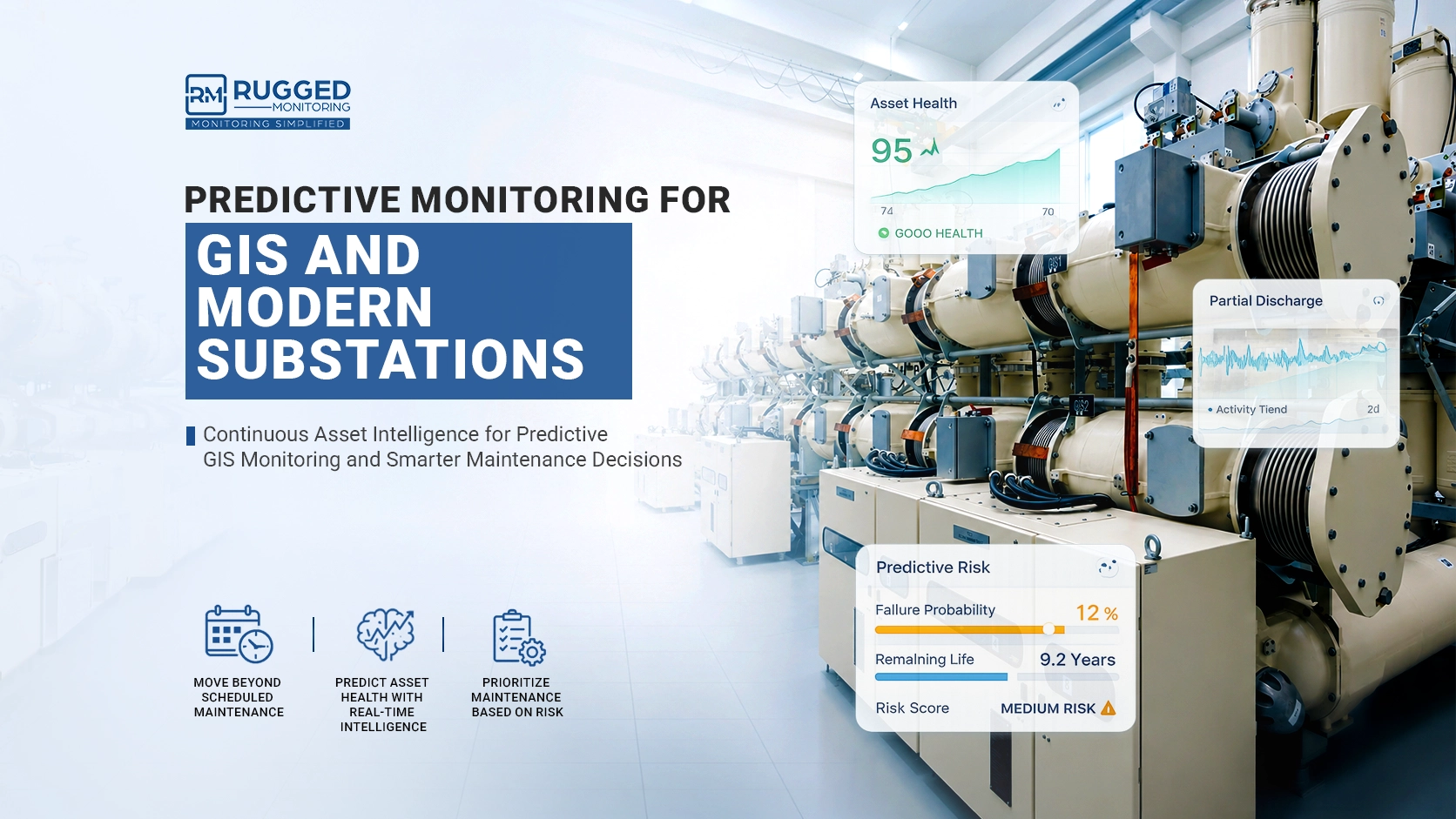
Predictive monitoring has evolved well beyond conventional alarm-based and early fault detection approaches. The integration of IIoT-enabled condition monitoring, advanced analytics, artificial intelligence, and digital twin technology is now central to modern utility asset management. These advancements not only deliver continuous, real-time operational intelligence but also enable data-driven maintenance planning, optimizing reliability and advancing long-term sustainability objectives.
For critical assets such as gas-insulated switchgear (GIS), which are highly regarded for their compact size, high reliability, and ability to operate in demanding environments, predictive monitoring is a must. Unlike periodic inspections, it provides continuous visibility into asset health, enabling utilities to prioritize maintenance based on actual risk, reduce unplanned outages, and improve overall grid reliability.
Why Are GIS Failures Still Happening Despite Regular Maintenance?
Modern GIS equipment is designed for decades of reliable operation, yet utilities continue to experience failures that result in outages, equipment damage, and costly emergency maintenance. The issue is rarely a lack of maintenance but often a lack of visibility into developing defects between inspection intervals.
Most maintenance programs remain calendar-based. Equipment is inspected according to predetermined schedules, while many internal degradation mechanisms continue to develop unnoticed. Since GIS is enclosed in sealed metal compartments, visual inspection alone cannot detect critical internal issues such as insulation degradation or hotspots.
Additionally, asset conditions can change between maintenance intervals. Environmental, electrical, and mechanical stresses can influence GIS health and performance. As operating demands increase, these stresses may also increase, making traditional maintenance strategies alone insufficient.
For example, a disconnect switch may pass its annual inspection but develop increasing contact resistance several months later due to repeated operations. Without predictive monitoring, such issues may only be discovered after failure.
What Is Predictive Monitoring for GIS Assets and Modern Substations?
Predictive maintenance is built on the same framework as GIS condition monitoring. It combines sensing, condition analytics, historical trends, and operational context to determine how, why, and where the asset is developing faults.
Converting raw operational data into maintenance intelligence helps GIS operators identify patterns, correlate indicators, and estimate the asset’s future behavior.
For Gas-Insulated Switchgear
Unlike reactive maintenance, which only reports measurements or displays alarms, predictive monitoring analyzes how the asset’s health and performance change over time. Continuous measurements from GIS assets are combined with operational context, historical behavior, maintenance history, and equipment criticality to provide a much clearer understanding of asset health.
Consider a GIS compartment where humidity increases slightly over several months while intermittent partial discharge activity also begins to rise. Neither parameter alone may justify immediate maintenance. Viewed together, however, they suggest insulation performance is changing and warrant closer investigation during the next planned outage.
Predictive monitoring identifies these relationships before they develop into operational failures.
For Substations
Utilities are collecting more operational data than ever before through intelligent devices, IoT sensors, SCADA systems, protection relays, and other digital substation technologies.
Predictive monitoring is a part of this modern connected system, integrating data across all assets, monitoring, conditions, and intelligence. Instead of reviewing thousands of individual sensor values, engineers evaluate deterioration trends, equipment health indicators, and estimated failure risk. Assets can then be prioritized by condition rather than by age or maintenance schedule.
Its capabilities also support broader utility asset management objectives, including risk prioritization, maintenance optimization, lifecycle planning, and regulatory compliance.
Thus, as utilities continue to modernize substations, predictive maintenance will become increasingly important for smarter maintenance planning, stronger power system reliability, and improved operational resilience.
Predictive Monitoring as the Foundation for Intelligent Asset Management
For utilities, predictive monitoring is not the final objective but the foundation of intelligent asset management and grid digitalization.
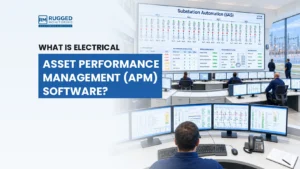
While predictive monitoring identifies and predicts the future behavior of GIS, advanced systems such as asset performance management (APM) extend its value beyond just prediction.
APM systems combine monitoring data with asset criticality, maintenance history, inspection records, failure modes, operational loading, and business consequences. Instead of asking whether a GIS asset is deteriorating, utilities can provide answers to more strategic questions:
- Which assets present the highest operational risk?
- Which interventions should be included in the next outage?
- Which defects can continue to be monitored?
- Where should maintenance budgets be allocated for the greatest reliability improvement?
Predictive monitoring therefore becomes more than a maintenance technology. It becomes a strategic capability that supports lifecycle planning, investment decisions, and long-term grid reliability.
How does Asset Performance Management Contribute to Reliability?
Although GIS condition monitoring and predictive maintenance provide valuable insights into asset health, reliability depends on more than just early fault detection. Maintenance teams also need to analyze the same data to decide which assets require immediate attention, which issues can be deferred, and how resources should be distributed.
This is where Asset Performance Management systems extend the value towards reliability.
APM provides a more comprehensive view of asset health and its potential impact on network reliability. By allowing utilities to move beyond just predicting faults, teams can prioritize maintenance based on the likelihood and consequences of those faults.
For example, two GIS bays may exhibit similar levels of partial discharge. However, if one feeds a critical transmission circuit while the other serves a redundant feeder, the operational risk is very different. An APM system incorporates this context, enabling maintenance teams to focus on the assets that pose the greatest threat to system reliability rather than simply responding to the highest sensor values.
Over time, this risk-based approach improves maintenance efficiency and asset performance. Resources are directed where they deliver the greatest reliability benefit, unnecessary interventions on healthy assets are reduced, and emerging issues are addressed before they escalate into failures.
As utilities continue to modernize their substations, APM becomes the decision-making layer that transforms monitoring data into predictive monitoring strategies, supporting higher power system reliability, stronger grid reliability, and more informed long-term asset management.
Transform your GIS monitoring from reactive to predictive & beyond. Book a Demo of our Enterprise APM Suite, RM EYE.
FAQ Section
What is predictive monitoring in GIS assets?
Predictive monitoring continuously analyses operational and condition data from GIS equipment to identify deterioration before failures occur. It combines real-time monitoring with trend analysis and analytics to support proactive maintenance planning.
Why are GIS failures still happening despite regular maintenance?
Many GIS defects develop gradually between scheduled inspections. Internal issues such as partial discharge, moisture ingress, insulation degradation, and mechanical wear often remain undetected without continuous monitoring.
What parameters should be monitored in GIS equipment?
Common parameters include partial discharge, SF₆ gas density, gas pressure, humidity, temperature, breaker operating mechanisms, operating counts, and contact condition. Together, these measurements provide a comprehensive view of GIS health.
How does real-time asset monitoring prevent unplanned substation outages?
Continuous monitoring identifies abnormal equipment behavior early, allowing maintenance to be planned before defects affect system reliability. This reduces emergency repairs and improves outage planning.
How does predictive monitoring support digital substations and grid reliability?
Predictive monitoring transforms the large volumes of operational data generated by digital substations into actionable maintenance intelligence. This enables utilities to improve maintenance planning, optimize asset utilization, and strengthen overall grid reliability.